Pat from Thoughts From Taylorsoutback mentioned her issues with bee balm and I thought I should write an answer for her and others that may have the same issue. Below is my favorite book when it comes to the maintenance of perennials in the garden. Tracy DiSabato-Aust's book, The Well-Tended Perennial Garden is my bible. I should be reading the "bible" every day in the summer!
Tracy explains that powdery mildew on phlox and monarda is caused by high humidity and lack of air circulation. Also temperature fluctuations like warm dry days and cool nights work in favor of powdery mildew. She writes that cutting back the foliage after blooming may provide new disease free foliage. You must if you are going to cut the foliage back, give the plant some extra moisture. Also remember to disinfect your pruners in a 10% bleach solution (1 part bleach/9 parts water) or at the very least wash them with soap and water to restrict the chance of spreading the disease further. Tracy says that thinning may help to provide more air circulation, but also may not. She found with phlox that thinning the plant to provide air circulation did not always work well. She feels that choosing resistant varieties of both plants is the way to go.
Some resistant forms of Phlox paniculata include 'Bright Eyes', 'David', 'Eva Cullum' 'Fesselballon', 'Flamingo', 'Franz Schubert', 'Katherine', 'Look Again', 'Orange Perfection', 'Pax' ('Peace'), 'Prime Minister', 'Sandra', 'Speed Limit 45', 'Sternhimmel', 'Tenor', and 'The King'. Phlox maculata is resistant to powdery mildew. Varieties include 'Alpha', 'Miss Lingard', 'Omega' and 'Rosalind'.
The monarda didyma varieties that are resistant to or only slightly affect by powdery mildew include 'Jacob Kline', 'Blue Stocking', 'Colrain Red', 'Gardenview Scarlet', 'Marshall's Delight', 'Sunset' and 'Violet Queen'. I'm going to leave it up to you to find and google a variety you are interested in planting. Hope this clears up powdery mildew for us all! Rainy (Yay!) day outside. Hope you are having a great day. Talk to you later.
The content of this site is anecdotal and provided for entertainment purposes only. It is not intended as medical advice. If you are ill, please see your doctor.
Tampilkan postingan dengan label Herb Gardening Basics. Tampilkan semua postingan
Sabtu, 14 Juli 2012
Kamis, 17 Mei 2012
Herbal Designing on the Fly!
Well, we are going to have a string of beautiful days here and we are going to get some if not all of the plants I purchased planted. So you may not see or hear from me for a tiny bit of time. I'll try to post updates as we get sections planted. I may be doing some herbal designing on the fly! I wanted to make some small vignettes amongst the lavenders that are surviving. I've got two lemon verbenas to plant that have been inside. Those two red-veined sorrels that you see in the photo have been moved out. They were taking up real estate and they needed to go. The garlic chives were taken out over the past week. So I have a bit of territory to design. Not much, but it's something. Where I usually plant the scented geraniums has been overtaken by lemon balm! No surprise there. So we will just work one section at a time. I'll try to remember to take before and after photos! I'll also be squishing four-lined plant bugs as we go. My theory is if we leave some lemon balms at the perimeter of the garden. They will stay there rather than come in and damage the nicest herb plants! A little wishful thinking, herbally speaking! Hope you had a great day. Going to go make a list and do some combinations of plants and a plan. Talk to you later.
Rabu, 02 Mei 2012
A List of Tender Perennial Herbs
OK, here is my last list of herbs, tender perennials. Let me know if I forgot any favorites. It just works out that in botanical names, lemon verbena is first on my list. For you ladies and gentlemen in the southern climates, these would all be perennials for you. I'm taking a herbal moment here because you are all so very lucky! As I told you in various "mild" winters such as we had this past one, I may have gotten some on this list through the winter. Although none of the scented geraniums outside made it through, my curry plant did make it through as did a lemon verbena. That is very atypical for those plants. My 23 year old plus or minus sweet bay is doing well in its container. I also got two rosemarys through and a pineapple sage inside.
Lemon Verbena (Aloysia triphylla) is my favorite herb. It is a native of South America and can grow up to ten feet in its native land. Lemon verbena is propagated by cuttings not by seed. You grow lemon verbena for its leaves not its flowers. I grow it both in my garden and in a pot. It gets to about four feet in the ground in the northern climates. I always try to put one in a container to bring it inside for the winter. Once inside it almost always drops its leaves and goes dormant. Water it every week to ten days inside. It will start leafing out in February or so and you will be able to put it out again in May after the threat of frost. I use lemon verbena leaves fresh in cooking and baking. It is like the bay leaf. You need to take that midrib out of the leaf before you use it to cook. Dried leaves can be used in tea blends or for potpourri. You can plant this mid to back of the herb border and dig it up and bring it back in for the winter. This is a link to my initial post on this magical herb in 2008 called What’s in an Herbal Name.
Curry Plant (Helichrysum italicum) is a wonderful herb that smells like the curry spice but is not the plant that produces it. Curry is a blend of several herbs together. This is a lovely gray leaved herb that produces yellow button flowers. The one fact that I didn’t know about curry is that it repels bees! I really do like the plant so I will continue to grow it. It would be a front of the herb border plant in my herb garden. Here is a post I did several years ago about the curry plant.
Sweet Bay(Laurus nobilis) is a wonderful container plant that can grow to about six feet tall. It is perennial for Zones 8-10. Propagation is from cuttings and that can take many months to root. Healthy trees respond to pruning and shearing. The only real problem with bay trees is that it can get scale. Use the leaves fresh or dried. In both cases for cooking they should be removed before serving the prepared food. Here is a link for a post I did when sweet bay was the herb of the year. I would just plant it in a container if you are in the northern part of the US and forget about using it in a border. Some gardeners dig a hole for the container and then in August or September get it out and start taking it inside to get it accustomed to the changes.
Sweet Marjoram (Origanum marjorana) is considered a tender perennial, but I treat it as an annual in my garden. I have had it comeback in certain years, but that does not happen often. I love it even more than Greek oregano. I love the knotted white flowers in the late summer. You need to be clipping this herb so it doesn’t go to flower too quickly and using it fresh or drying it to use during the winter. I love to make an herbal butter and use it on fresh veggies like corn on the cob. It is a low grower and should be at the front of the border. I talked about sweet marjoram in this post about Shakespeare's herbs.
Scented Geranium (Pelargoniumsp.) is a native of South Africa and is considered a tender perennial in zones north of 9, but this is another herb that I treat as an annual. It is very easy to take cuttings and bring them in for the winter. It is nice to have a scented geranium on a windowsill that you can sniff the leaves from time to time. It seems in mild winters that varieties such as coconut or apple will reseed and come back in the garden. You definitely grow them for their leaves and not their flowers. They need full sun with the exception of peppermint-scented scented geraniums that need afternoon shade. Scented geraniums are very good in a container situation. Lemon, rose, peppermint and apple are some of my favorite scents. Used in baking a cake as a liner to the cake pan or dried in a potpourri, scented geraniums are a versatile herb. Because there are many sizes and shapes of scented geraniums, I would use them in the front or mid-range of the herb border. The small sizes are great in a container as shown in this post from my blog in 2009.
Rosemary (Rosmarinus officinalis) is a native of the Mediterranean region and is a tender perennial in the northern part of the US. In native lands it can grow to six feet tall. We usually have at least two rosemarys in the garden, one upright variety and one prostrate. Rosemary is just not hardy for us here in the ‘Burgh. Propagation is by layering or stem cuttings. You should provide well-drained soil to prevent root rot and good air circulation to discourage powdery mildew. We usually keep at least one rosemary in a container so it can be brought inside. With the mild winter we had it might even have made it through the winter. If you are going to try to get a rosemary through the winter, go with the 'Arp' variety. This is the year that I didn't leave one in the garden. It would be a front or mid-range herb in the border. This is a post I did from last year called One of My Favorites-Rosemary.
Pineapple Sage(Salvia elegans) is a tender perennial of the large salvia family. It is about four feet tall in my herb garden and has beautiful red tubular flowers that hummingbirds love as you can see in my post called My Herbal Dream Come True. The leaves have the wonderful scent and taste of pineapple. You must use them fresh because the leaves do not dry well. I usually use them chopped finely in my fruit salads for breakfast in the summer or you can use the fresh leaves in your cold iced tea or lemonade. We had a pineapple sage make it through the winter on a south facing windowsill. Pineapple sage does well in the mid-range to the back of the herb border.
Been rainy and warm in the garden. Hoping to get back out to work in it some time later this week! The weeds are growing. Hope you are having a great day. Thanks for stopping by my herb garden. Talk to you later.
Selasa, 24 April 2012
A List of Annual Herbs
I wanted to add to the list of perennials I gave a few weeks ago with a list of annual herbs. These herbs can be planted early for those of you who live in the southern parts of the United States. Gardeners in the northern parts of the US have to wait for warmer temperatures to plant some of these because of frost dangers. Any of the herbs that I am calling tender perennial for the northern parts of the US, should be perennial for gardeners in the southern parts of the US. Everyone should be using these annuals to enhance their herb gardens because the flowers I have chosen bloom almost all summer long. Annuals are grouped into three categories based on how they tolerate cold weather: hardy, half-hardy or tender. Hardy annuals tolerate low temperatures and even frost. Half-hardy annuals tolerate a light frost but will be killed by a heavy one. Tender annuals have no frost tolerance and suffer if the temperature drops to a few degrees above freezing. This list is alphabetical by botanical name. I know some of you do not like the botanical name, but if you know the botanical name, it is the same in any language. It is important to learn them.
Dill (Anethum graveolens) is easily started from seed in full sun. You should plant succession plantings to provide lots of leaves. I personally love dill. It brings a lot of beneficial insects into the garden, especially the striped caterpillars that become black swallowtail butterflies. Compact varieties are ‘Bouquet’ and ‘Fernleaf’. Slow bolting varieties are ‘Tetra’ or ‘Dukat’. Harvest leaves at 12” and harvest seeds when they turn brown. Depending on the variety you can use it in the front for the compact varieties or in a container. The larger varieties should be in the back of the border. You can see a photo of dill in bloom in this post that I wrote in 2011 called Growing Dill.
Chervil (Anthriscus cereifolium) does better in cool, mild weather. It can stand a bit of shade. It bolts in the heat. I have heard it called French parsley. It has a mild anise flavor with white flowers. You should sow seeds in spring and fall and make sure you plant it where you want it to grow because it is difficult to transplant. It isn’t very tall. I would say about the size of a parsley plant. I do not grow it enough in the garden. It would do well in a container or in the front of the border.
Borage (Borago officinalis) is in my garden called an herbal space hog. Borage needs full sun and does not do as well in shade. It is easily sown from seed. It is a prolific self sower. I’m picking seedlings out of prime vegetable gardening space as we speak. Young leaves are cucumber scented and can be used in salads if you can get passed the fuzziness. Has beautiful star shaped flowers that start pink (Thought I had the wrong plant!) and then turn to blue. You need to keep pinching it back if you don’t like floppy plants or stake it. The flowers can be frozen in ice cube trays for summer drinks. It is a back of the border kind of herb. It does have a way of sneaking up to the front. Here is a post I did called An Herbal Space Hog.
Calendula (Calendula officinalis) is a very easy annual to grow from seed and once established, it will self-sow very gently around the garden. It grows up to 18” tall. Calendulas also do better in mild, cool weather in full sun or light shade. You should keep deadheading the flowers to keep them blooming. It is called poor man’s saffron because in the olden times it was used to color food like saffron does with a golden yellow color. It does not give a saffron flavor. Calendulas are also an edible flower. Use the petals to decorate a salad. I also add the petals to cookies. Plant these in the middle or front of the herb border.
Check out what I wrote about calendulas on my blog called Herb of the Year-Calendula.
Epazote (Chenopodium ambrosioides) is a plant that you only need one of in the garden. It will reseed if it likes where it is planted. It will grow well in full sun or part shade. It will also do well in morning sun with afternoon shade. It is a very pungent (camphor) smelling herb and is used freshly chopped in the last 10 minutes of cooking a pot of beans to take away the gas. Here is a link for a post I wrote about epazote called appropriately enough E is for Epazote. It would be good in the back of the border.
Cilantro/Coriander (Coriandrum sativum) is a mild weather plant that does best in full sun. It would be considered a tender annual. You can sow the seeds in the early to late spring and start harvesting leaves as soon as there are enough. Once the days heat up, the cilantro will flower and go to seed and then you can collect the seeds and use them in cooking and baking. The plant in flower can reach 3’ high. Just like the dill, you need to successively seed to get continuous crops of leaves. Use the leaves in Mexican, Caribbean and Oriental dishes. Use ground seeds in baked goods, soups, casseroles or potpourri. I would plant this mid border or to the front of the border.
Lemongrass (Cymbopogon citratus) is a tender perennial in the northern half of the US and can be grown in a container and brought inside for the winter. It can also be treated as an annual. Lemongrass prefers to be grown in a hot and sunny location in very well drained, sandy, moist soil. Be sure to water thoroughly and more frequently during dry, hot spells. It adds a grass like quality in the herb garden. It is very easily dried and used in tea blends. Use the leaves fresh in fish and chicken dishes or into soup. Lemongrass in the garden can grow to about 3’ tall and about 2’ wide and should be placed in the mid-range of the herb border.
German Chamomile (Matricaria recutita) is a wonderful apple-scented plant with daisy like flowers that grows to about 2’ tall. It grows easily from seed which should be sown in the early spring and again in summer for a succession of harvests. Harvest flowers when their petals start to turn downward to use fresh or dried in teas. The plants fade quickly after flowering. In my experience if you harvest the flowers, they keep producing more flowers. If you let the flowers go by meaning not harvesting them, the plant will die. So you have to be on top of harvesting the flowers especially in the hot weather. It is a front of the border plant.
Lemon Mint(Monarda citriodora) is an annual flower that I just love in the garden. It is a triple bee balm like flower sitting on top of one another. The variety is called “Lambada”. I just love it planted with sage. It is an attractor of hummingbirds and all good insects in the garden. It is easily started from seed and you can buy the seeds from Vermont Wildflower Farm. I have never used the flowers or leaves. The red variety of bee balm flowers is the more delicious one, but the leaves have a lemon scent when crushed. Lemon mint grows to be at least 2’ or 3’ tall. This link from Bluestone Perennials is a really good image. However, it is a monarda, but it isn’t a bee balm as they say because bee balm is (Monarda didyma). So this is a lesson in botanical names, please learn and use them as often as you can. This herb should be in the mid border area.
Basil (Ocimum basilicum) is one of my favorite annual herbs. OK, you are catching on to my herbal drift, they are all my favorites, but this one is very special. Plant seeds and plants in full sun and after the soil temperatures are at least 60˚F. If you plant it early than that, it will just stall and not grow. Basil resents cold temperatures and if we continue to have up and down weather, it may get caught in a freeze warning and then it is done so consider it a tender annual. Basil also needs more moisture in dry, hot summers. Pinch off flower heads to prolong harvest and keep plants bushy. There are lots of different flavors and sizes of basil. Some of my favorites are lemon basil ‘Mrs. Burns’, cinnamon basil, sweet basil, spicy globe basil, ‘Purple Ruffles’, ‘African Blue’, ‘Siam Queen’ and ‘Green Pepper.’ There is a blog site you should check out called Ramona’s Basil Garden Love Your Basil. She is a guest blogger for The Herb Companion and while she isn’t always blogging, she has an e-book available and it is full of information and recipes about basil. The majority of basils should be toward the front so you can deadhead them easily.
Sweet Marjoram (Origanum marjorana) is considered a tender perennial, but I treat it as an annual in my garden. I have had it comeback in certain years, but that does not happen often. I love it even more than Greek oregano. I love the knotted white flowers in the late summer. You need to be clipping this herb so it doesn’t go to flower too quickly and using it fresh or drying it to use during the winter. I love to make an herbal butter and use it on fresh veggies like corn on the cob. It is a low grower and should be at the front of the border.
Scented Geranium (Pelargonium sp.) is a native of South Africa and is considered a tender perennial in zones north of 9, but this is another herb that I treat as an annual. It is very easy to take cuttings and bring them in for the winter. It is nice to have a scented geranium on a windowsill that you can sniff the leaves from time to time. It seems in mild winters that varieties such as coconut or apple will reseed. You definitely grow them for their leaves and not their flowers. They need full sun with the exception of peppermint-scented scented geraniums that need afternoon shade. Scented geraniums are very good in a container situation. Lemon, rose, peppermint and apple are some of my favorite scents. Used in baking a cake as a liner to the cake pan or dried in a potpourri, scented geraniums are a versatile herb. Because there are many sizes and shapes of scented geraniums, I would use them in the front or mid-range of the herb border.
Parsley (Petroselinum crispum) is a true biennial which means it goes to flower and seed almost immediately in the second season. You can delay that from happening by clipping off the flowers, but really what I like to do is have additional first year plants that give you leaves and the second year plants are larval food for the caterpillars of the swallow tail butterflies. Parsley can be grown from seed, but soak the seed in hot water or freeze it overnight to jump start it because it is a slow germinator. Plant it where you want it to grow because of the taproot makes it difficult to transplant. Flat-leaf or Italian parsley is favored but curly parsley is ornamental and is just as flavorful. I have said it in the past, if you can only grow one herb, it should be parsley. You harvest the outer leaves and leave the inner plant or crown intact to keep it producing. At the end of the season, just harvest everything and put it in the freezer for winter use. Even though it is a short lived plant, the curly parsley makes a lovely looking hedge. This is definitely a front of the border type herb.
Summer Savory (Satureja hortensis) is the annual partner of winter savory which is the perennial version. Known as the bean herb, I really love it best in a Saturday summer omelet with other summer herbs. If you let it flower and seed, it will self sow. In a hot summer, it will flower and go to seed quickly. So it must be watched and harvest leaves before it flowers as you do with all herbs. It has tiny pink or purple flowers. It also makes a lovely hedge in the front of the border, but you could use it as an accent herb mid border as well.
Stevia (Stevia rebaudiana) is grown in full sun to partial shade. It is an herbal sugar substitute. It contains steviol glycosides compounds that are up to 300 times sweeter than sugar. Seeding stevia can be difficult because of poor germination rates. Stevia has the most impact planted in groups. You should start with new plants. The leaves are not aromatic but are sweet to the taste. Harvest the leaves before flowering to ensure the highest concentration of glycosides. I have harvested the leaves after flowering and dried with great results. So don’t be too concerned if you find that it has already flowered. Stevia does not breakdown when heated, so it can be used in cooking or baking without a problem. Stevia gets around 3’-4’ in flower so mid-range in the herb border would be appropriate. Here is a post about a mystery herb in my garden called stevia.
Mexican Tarragon (Tagetes lucida) is an annual for those of us in the northern tier of the US and a half-hardy perennial for those of you in the southern part of the country. This is a substitution for French tarragon in the south. I have grown this occasionally and it dries very well unlike French tarragon that does not dry as well. It also has very nice yellow marigold like flowers. I think if I'm able to find Mexican tarragon, I will buy several plants and use it dried this coming winter. I have used it as an anise flavor in some of my tea blends. It is about one foot to two feet tall in bloom. The flowers do attract pollinators. Here is a link to a photo of Mexican Tarragon from Bonnie Plants.
‘Lemon Gem’ Marigold (Tagetes tenuifolia) is the marigold that has a dwarf habit and would be the only marigold that I would eat. They bloom better in full sun. I had a marigold hedge (Like those herbal hedges!) one season in the vegetable garden. They bring in a lot of beneficial insects to the garden. I love this flower because it blooms until frost. I use the whole flowers to decorate a pasta salad with cherry tomatoes. I would only eat the petals though. Because of people’s allergies, the center of the flower which has the pollen could be a problem. I would use this as an edging plant or an accent in the front of the herb border. Here is a post I did in 2008 about the powerhouse annual, 'Lemon Gem' marigolds.
Nasturtium (Tropaeolum majus) is a very easy annual herbal flower that is native to Peru and grows very well from seeds. The seeds are fun for the kids to plant and have them take care of in the garden. Both flowers and leaves are edible and peppery in flavor. I love to fill the flowers with guacamole for an appetizer or for lunch. They are both vining and clump forms. They seem to like a bit of shade in very hot and dry summers. They really take off here in the fall and bloom until frost. The ‘Alaska’ cultivar has variegated leaves and the ‘Whirlybird’ cultivar has no spur on the flower so it is a bit milder in flavor. This link is for a guest post that I did on nasturtiums for The Herb Companion magazine called: Edible Delights: 3 Nasturtium Recipes.
These are some of my most favorite annuals. Most of them are in my gardens every season. Some are not in it enough. Please let me know if I left an herb out! I will make this post a page under my banner photo so you will always have access to it. I have one more list in the works and you may have guess it, tender perennials. Hope you have had a great day. Talk to you later.
Senin, 09 April 2012
It Seems to be the Same Every Year, Herbally Speaking!
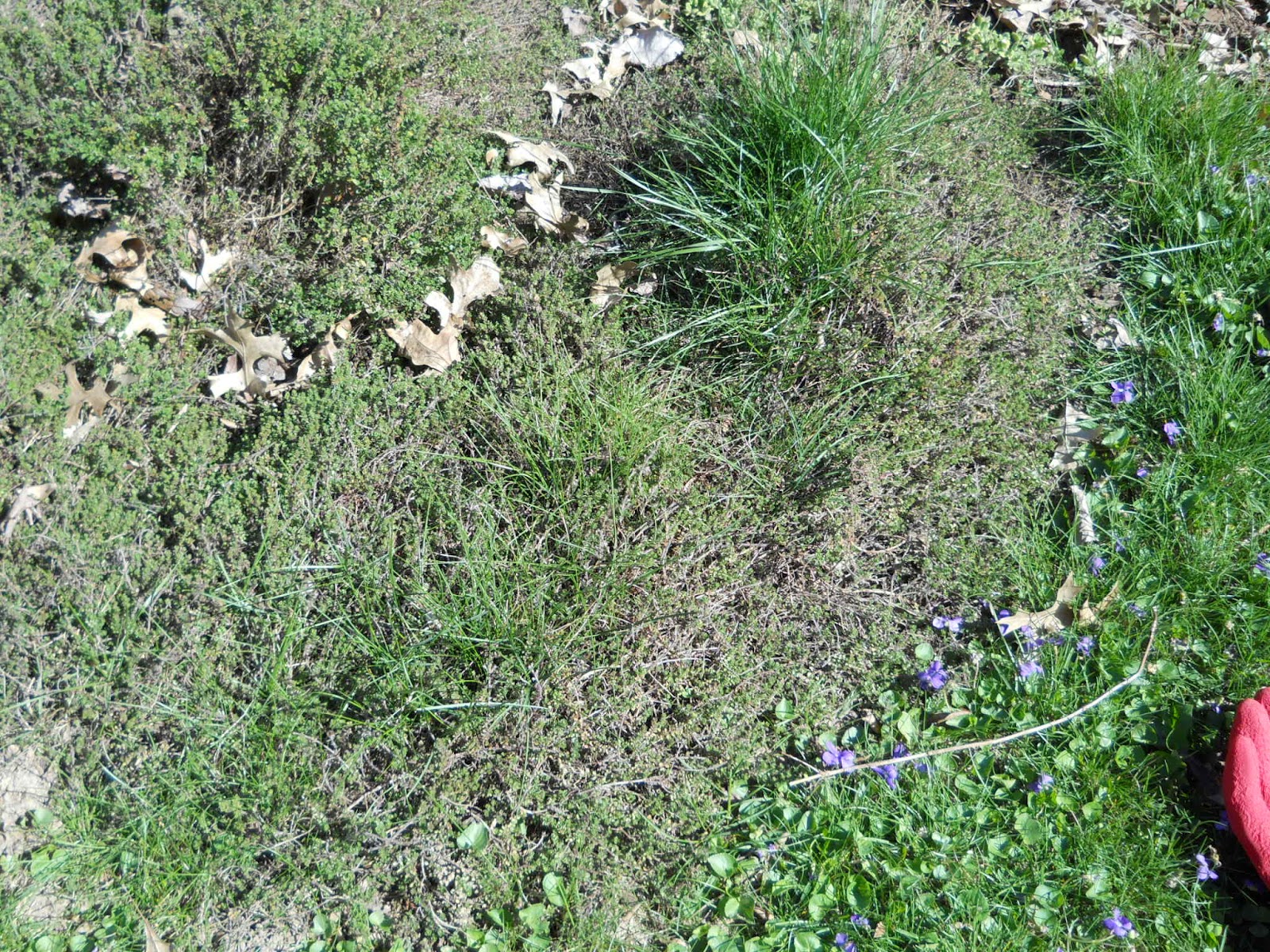
| The lawn has grown up through the thyme! |
| A lot of the grass can be pulled out underneath! |
Kamis, 15 Maret 2012
A Reader's Request: A List of Perennial Herbs!
This all started when a reader from northern Michigan asked what herbs were perennial in her climate. She already had chives, lavender and parsley (which I grow like an annual even though it is a biennial). OK, Janice from northern Michigan here is a list, not the list, just a list. I think you are in Zone 4a or b or you can pinpoint it better with an e-mail to me. This list is in no particular order. I'm just trying to get a list in a post and will refine it later if it is helpful to do so. I will also add links to earlier posts if I can.
Angelica (Angelica archangelica) (A biennial but if you let it seed, it will be perennial.) Zones 4-9 I call this a big babe herb. With flowers, can get six feet tall and four feet wide. Good for the back of a border
Anise Hyssop (Agastache foeniculum) Zones 4-9 One of my favorite edible flowers. Tastes just like a box of Good 'n Plenty. Probably a mid range plant or front of the border.
Lemon Balm (Melissa officinalis) Zones 3-7 This herb is a summer tea favorite. Once you have this herb, you will have it forever. Cut down by a third throughout the summer if you don't want it to bloom. Once you have let it bloom, it will seed wherever. I was pulling out little lemon balms in the garden today! Put this one in the front so you can clip it and use it. Has a musky lemon scent.
Catnip (Nepeta cataria) Zones 3-9 If you have cats, you'll maybe want a fence around it to keep them off of it. They do love it. I have never grown this but I would say it would be a mid range or front of the border herb.
Chives (Allium schoenoprasum) Zones 3-9 Janice already has this in her garden. It is a staple in my herb garden. Love those edible flowers in my omelet in the spring. This makes a lovely border especially when it is blooming. Cut down and chop up and freeze for winter use. Mid range or front of the border.
Garlic Chives (Allium tuberosum) Zones 3-9 The difference in garlic chives from regular chives is that garlic chives have a flat leaf and chives have a tubular or round leaf. Garlic chives have beautiful white flowers in August when you are looking for a flower in the herb garden. Just make sure you cut those flowers the minute they finish blooming or you will end up with a garden of garlic chives. Leaves are very good in stir fries. Mid range or front of the border.
Sweet Cicely (Myrrhis odorata) Zones 3-7 This is a good sugar substitute with an additional anise flavor. It reminds me of tansy. It does march along. Not super invasive and it does like the shade. It would be a good back of the border herb.
Bloody Dock (Rumex sanguineus) Zones 4-9 This is a red-veined sorrel. It is very ornamental. It does not have the lemony taste of regular sorrel. Does well in water or by a pond. It has gently spread itself throughout my garden and/or its seeds were composted and it has been spread that way. Front of the border of your herb garden.
Purple Coneflower (Echinacea purpurea) Zones 3-10 Trying to give you herb flowers as well as just herbs. This flower is a favorite of butterflies and the seedheads are loved by the finches and other birds in my garden. They do get sown around by the wind and the birds. One of my favorite flowers in the mid to late summer. They are not just purple either. Lots of color choices, but the granddad is the purple one. Mid range for an herb border. Two or three plants together make a nice stand of flowers.
Elecampane (Inula helenium) Zones 3-8 This is another big babe herb. I have always wanted to grow this plant but haven't always been able to find it. It has leaves similar to the mullein and the flowers are small and resemble a double sunflower. It would be a back of the border herb. It is used for dyeing and the root is used in the manufacture of absinthe.
Foxglove (Digitalis purpurea) Zones 4-9 I have trouble growing these flowers. They do need some shade. Although when I have grown them in shade, they reach for the sun. They are a poisonous flower and are a source of digitalis, the heart drug. They are a mid range flower in the herb garden.
Johnny-Jump-Up (Viola tricolor) Zones 4-9 Very front of the border. Many gardeners get these to reseed in the garden. I have not had that luck. Love these little faces in the herb garden. Need some shade to keep going into summer. An edible flower and easy to start from seed.
Horehound (Marrubium vulgare) Zones 4-8 Horehound is a lovely little plant with gray pebbly leaves. Make cough drops to help sooth your cough. Front of the herb garden border.
Horseradish (Armorica rusticana) Zone 3-10 Horseradish was the 2011 Herb of the Year and can be very invasive in a garden. You might to make a horseradish garden on its own. It would be a perennial herb, but just be aware that it will take over the garden unless you control it either in a pot that is deep because you are harvesting the root or by exiling it to its own bed. Has a beautiful flower in the second year.
Hyssop (Hyssopus officinalis) Zone 3-9 Very aromatic and may be not in the best way. Slightly bitter leaves used in soups or stews and with game meat. I do love the tiny blue or white flowers around July 4th. I would use it as a hedge in the front of the border. I need to use this herb a bit more often.
Joe-Pye Weed (Eupatorium purpureum) Zones 3-10 I have this in the back of the border. It is another big boy herb! It does alright in shade. It is a native of the eastern US. It has rosy purple flowers in the fall. Richters catalog talks of when the leaves are crushed the smell is vanilla. Another plus!
Lady's Mantle (Alchemilla vulgaris) Zones 3-8 This beautiful clumping herb is a beautiful addition to your herb garden. It has chartreuse flowers. The leaves are like little capes hence the name mantle. I would use it in the front of the herb garden.
Lamb's Ear (Stachys byzantina) Zones 4-9 Wooly leaves that are a delight for children. Were used as bandages for wounds. Front of the herb garden for these. Silvery leaf color is a nice contrast for other herbs in the garden.
Lavender 'Hidcote' or 'Munstead' (Lavandula angustifolia) Zones 4-8 These are two of the hardiest lavenders. These lavenders are the ones I would recommend you use to cook with. Any angustifolia cultivar would be edible. The other lavenders are too camphorous and not hardy in Zone 4. Mid range or front of the herb garden for these.
Spearmint (Mentha spicata) Zones 3-8 Most mints are invasive. If you don't want it everywhere in the garden, put it in a container. Spearmint is one of my favorite mints. Not as strong as peppermint. Delicious in tea blends. Richters calls it the best cooking mint. There are tons of mints not all of them are hardy to Zone 3 or 4 so make sure you check before buying it.
Mountain Mint (Pycnanthemum muticum) Zones 4-6 This is a bee magnet and very fragrant. It is beautiful in fresh flower arrangements and it dries very nicely. It can be used in the back of the border or mid border. It does run but is not invasive like regular mints.
Queen Anne's Lace (Daucus carota) Zones 3-10 I put this in because Janice loves this in the garden and Janice, I have good news that Richters in Canada sells seeds for a reasonable price. Check it out through the link above. I had this in my garden for quite a few years. A beneficial insect magnet. I would put this in the back or mid range part of your garden.
Fennel (Foeniculum vulgare dulce) or Bronze Fennel (Foeniculum vulgare dulce 'Rubrum') Zones 4-9 Both of these fennels can be used in cooking. Regular fennel has green fronds and bronze fennel has purple ones. I have had bronze fennel at various times. Just cut the flower heads before they seed everywhere! Use either of these in the back of the border.
Garden Sage (Salvia officinalis) Zones 4-9 I really love this species of herb. Garden sage is so versatile. It can be used for cooking or in potpourri or for an herb wreath. I love the gray green leaves in contrast with other herbs. I would use this herb in the mid range part of the herb garden.
Garden Sorrel (Rumex acetosa) Zones 4-8 Mostly famously used in sorrel soup. It is a spring herb that has a bright lemony flavor. It has an interesting red flower spike that dries very well. The leaf is shield shaped. We use the small early leaves in our salads. I would use this herb in the front of the herb garden.
Tansy (Tanacetum vulgare) I would find a place of exile for this herb. It is used to repel ants and a couple of summers ago it was a haven for the various stages of the ladybug. So it doesn't repel good insects! Don't be too quick to get rid of this herb. It has fern like leaves and can be in the back of the border but it does run so it can take over a bed if not careful. Not for culinary purposes, but mothchasers can use a bit of tansy. It has very nice yellow button flowers and I have made a very nice wreath with tansy at the end of the season.
French Tarragon (Artemisia dracunculus sativa) Zones 3-7 This is the only tarragon to use in cooking. It is not propagated by seed. If you purchase tarragon seeds, you have the more inferior Russian tarragon.
English Thyme (Thymus vulgaris) Zones 4-9 This is the one thyme to have for cooking. Silver Thyme (Thymus vulgaris 'Argenteus') Zones 4-8 I have some problems getting this through the winter. Sharp drainage is key. Lemon Thyme (Thymus x citriodorus) Zones 4-9 Can be creeping or upright. I really love the flavor of this thyme. Does it have anything to do with lemon? Maybe. Mother-of-Thyme (Thymus praecox) Zones 4-8 A very robust creeping thyme. Used in cooking. All thymes are good in the front of the border.
Other thymes may be hardy. Need to check your zones.
Valerian (Valeriana officinalis) Zones 4-9 Fern shaped leaves and white flowers that have a very fragrant scent of vanilla. I don't have this enough in my garden. It needs a bit of shade in the heat of summer.
Well, this is my first take and I will probably be editing it as I find other choices. I have tried to give you a variety of herbs. Obviously these will work for you all in the middle and south of the US.
It is just crazy warm here. Everything has started to bloom and the bad bugs are out! I'm worried that we are just going to go into summer with very little spring! Well, I will be adding other herbs as I go so I will put a link on my homepage. If you think of an addition, let me know! Talk to you later.
Rabu, 07 Maret 2012
Warm and Windy!
We went from snow and cold to no snow and warm (in the 60's) and windy. I have so much to do (as usual) that I'm just going to take one thing at a time. I did a garbage patrol today because out front someone had dumped some drinks in what they might of thought was a garbage bin. We had to put up a wire fence to keep out the dogs from leaving deposits. It has worked for the dogs, but the humans need a little more training! This is a great time to be weeding the grass out and trimming the herbs back. My pineapple mint invades everywhere and I don't mind it too much. I do try to control it at this time of year so that it doesn't become a problem later. I also didn't get carried away because I don't want to be sore tomorrow! I want to be able to get back out there and keep working!
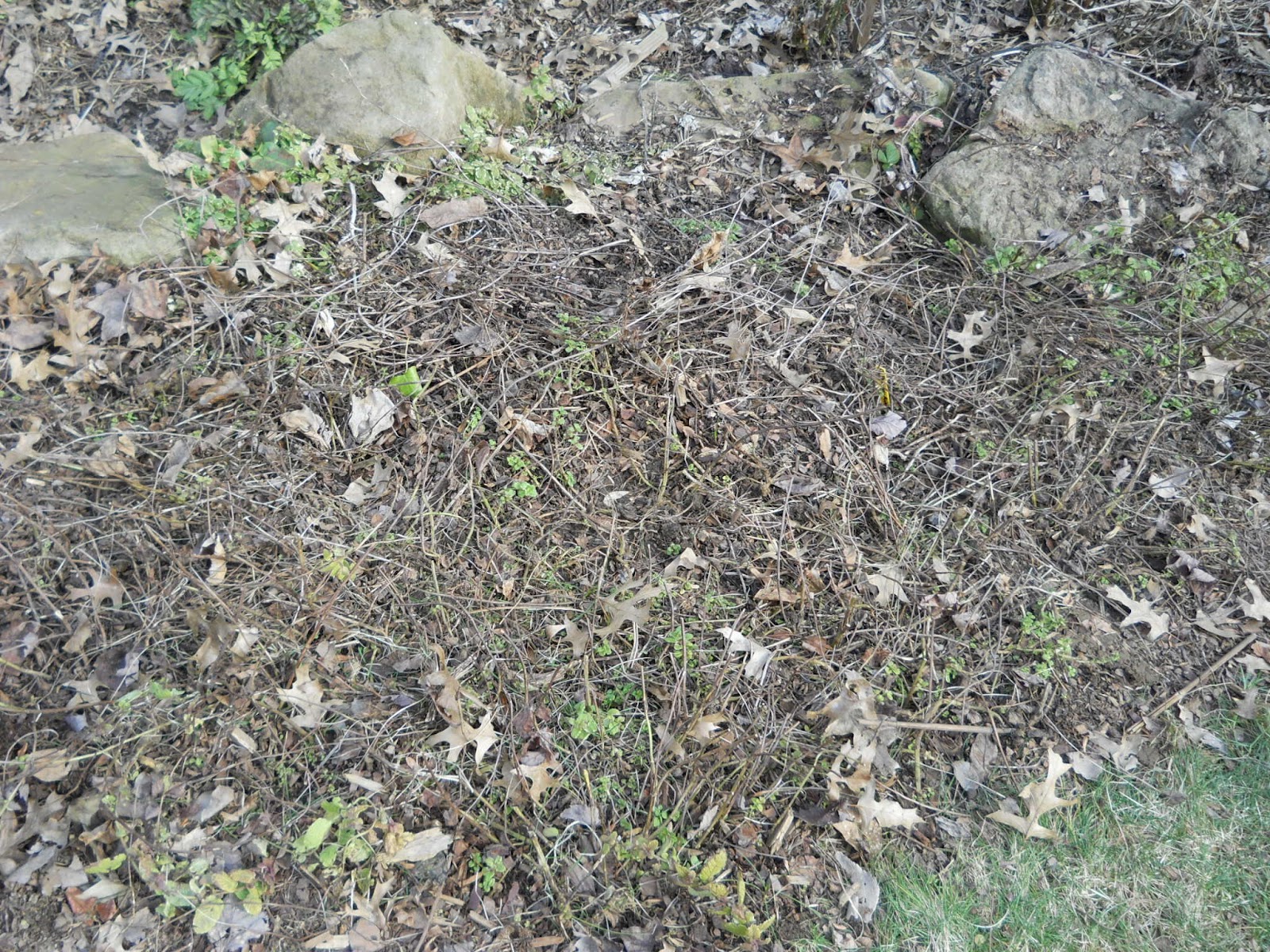
It may not look like much but the mint survived above ground this winter more than any other year. It will be easy to see where it needs to come out. Hope you are having a good day wherever you may be. Talk to you later.
Rabu, 22 Februari 2012
Some Resources to Help with Your Herb Garden Planning!
This is an early copy of my herb garden. Remember I live with an architect so he is a big help with some the planning aspects. You don't have to live with an architect though. I have found that The Herb Companion has a terrific Herb Garden Planner that you can try out free for 30 days. I have not taken advantage of mine, but I'm going to redesign and rework my plants this season with the help of Herb Garden Planner. I also wrote a post for getting started with your herb garden last April called Lots of Good Basic Herb Gardening Information. Here then are some resources to help you get local information. A couple of national websites to give you master gardener information, one from the American Horticultural Society that gives you a map to click on for master gardener information by state and if you scroll down into Canada there are links for their programs. If the master gardener links are stale which sometimes they are, here is also a link to the county extension websites that are available. They usually have master gardeners or extension agents available to answer your questions for your local area. I love extension and it is an important asset that you should be using. The USDA just came out with a new zone map. That will give you a ballpark of what you might be able to grow. Then because I'm answering a question about what perennial herbs a reader in northern Michigan can grow. I will give you a couple of book resources to consider.
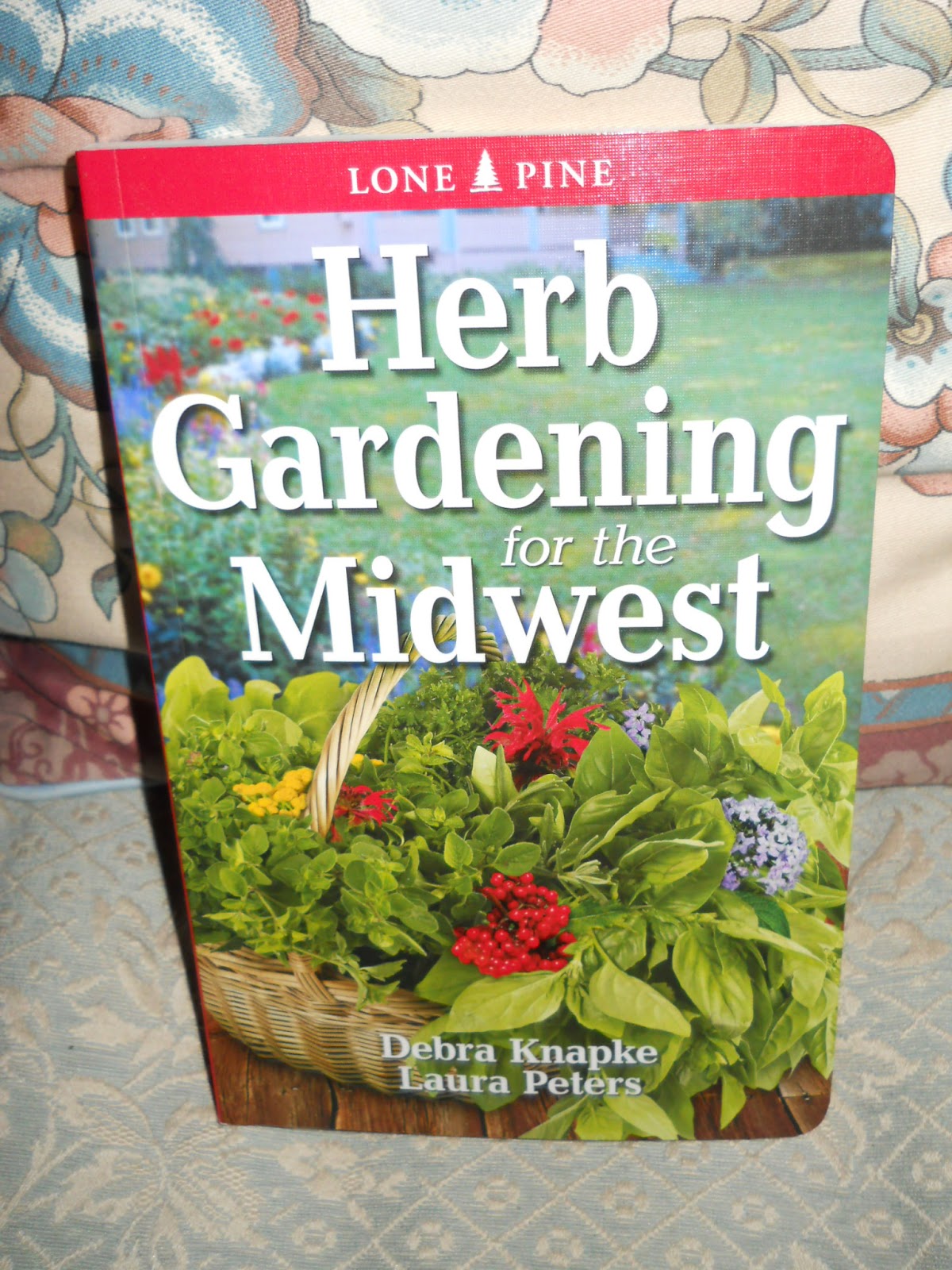
This is a series from Lone Pine books called Herb Gardening for the Midwest by Debra Knapke and Laura Peters. Again to give you a ballpark of growing, harvesting, propagating, etc. It now has an old zone map! Can't win. It is a good basic book. If you live a little south and east in the Cleveland area, this book will be helpful. Susan McClure passed away a few years ago but she wrote a book called The Herb Gardener: A Guide for All Seasons. Good information, good photos of plants. Ideas for crafts and cooking as well. Each of them has good color photos of the herbs. They both have herbs that I haven't even grown!
I also thought you should see the first book on herbs I bought. I may have talked about this in a previous post, but here it is Herbs How to Select, Grow and Enjoy, an HP Book by Norma Jean Lathrop. I think this one may be available as a used book. It's a good one. It gave me a great foundation.
Well, I think I have given you some food for thought. Tomorrow I will start discussing strategy and herbs to consider. Going to walk before it rains! Can't believe the weather. Talk to you later.
Selasa, 21 Februari 2012
Going to Get Down to Herbal Business!
Well, I can't believe where the time has gone. We are about a month from spring. That's the good news. The bad news is I'm no closer to coming up with a new design for my herb garden. I'm thinking of doing small vignettes around the established lavenders. Have I said that already? It feels like I'm repeating myself. Since I wrote about Shakespeare's herbs and flowers, I may add a few more of those herbs and flowers in. The front bed that has sage may be redesigned once again to try once again to make a small knot garden. I'm a perennial optimist about it!
The Herbal Husband will be off to Peru at the beginning of March and so I will have a bit of time to try to remove some of the hangers on herbally and otherwise speaking. My two prime targets are the garlic chives right by St. Fiacre (some times fiasco) and a couple of clumps of ornamental grasses. I also have to mow down the ornamental grasses before they really start growing. Well, wherever you may be if you have planning of any kind, you should be working on it because the next month will go fast! We'll be behind before you know it! Seems some years I'm always trying to catch up!
Selasa, 01 November 2011
Getting a Second Bloom and Tidying Up!
I cut back the yarrow in August (It's in the center of the photo.), I think and it's going to bloom again. I really try to tidy up the garden. It doesn't always happen until late in the game, but for the most part it is necessary. Diseased plants go to the trash and healthy plant material goes to the compost. I like to keep some of the flower heads for the birds to nosh on. They love the coneflowers and the black-eyed Susans. I have even seem them on the mint seedheads even.

I love the calendulas in the fall season. I am hoping to have a bouquet of herbs on the Thanksgiving table and that I will have calendulas in the mix.
I usually have a second bloom of chives about this time of year. It is a really good bloom this time. There are usually only one or two. It was a beautiful day outside. Got out for a walk and the sun is very bright. Always good before winter really sets in. Hope you had a great day. Talk to you later.
Sabtu, 29 Oktober 2011
An Article for Beginner Herb Gardeners
I know some of you need help on what to do in your herb garden at all times of year. There is so much to tell. The Herb Companion website is a wonderful resource and not just because I blog for them. Sal Gilbertie has written a new book for beginners and The Herb Companion has put an excerpt from that book on its website. Here is a link to the article called From Our Bookshelf: Herb Gardening for Beginners. It won't be published until next year, but maybe it will help guide you in the short term. I am going to try over the next months to rearrange my blog to make my labels geared to what you should be doing in your herb garden. I have been posting for a long time so it may take awhile for the rearrangement.
Kamis, 28 April 2011
Lots of Good Basic Herb Gardening Information!
The photo is just decoration for this post. I wanted you to see my angelica hedge! We actually transplanted some of it out of my herb garden! It's going to be massive again.
I had a little herbal meltdown the other day and I've come into the herbal light and it's all good. Sometimes we all need a little jolt and I got one. I know some of you would like another blog on other herbal topics. I have decided not to go there for the moment. Do blogs ever run out of space? Maybe. Well, we will cross that herbal bridge when we come to it.
I'm going to lean on the great articles and wisdom of my favorite herb magazine, The Herb Companion! If you are interested in starting an herb garden, Jim Long wrote a great article on a five-year plan for an herbal kitchen garden. Even though it is talking about herbs and veggies (which is a great combo), the foundation of planning a garden is there. I think the most important part of any garden, herbal or not is the location. Herbs like at least six hours of sun a day. More is better. East and west are good especially in the southern and western parts of the United States. I wrote about the Tucson Botanical Garden when we visited in 2008 and tips for growing herbs in the west. North is the worst exposure and if you only have a northern location, you need to be growing another species of plants! There is an article called An Herb for Every Spot on The Herb Companion website as well and Herbs in the Southern Garden is another article that may give you helpful hints and tips on herbs if you live in the southern portion of the United States.
Also soil is very important. It is a living and breathing foundation of your garden. We have clay soil here in southwestern Pennsylvania. If you are starting a whole new garden or just a new bed with herbs, I would be doing a soil test through your local county extension office. I think just about every county in the United States has extension offices and possibly a master gardener. Take advantage of this resource because they live in your specific area and deal with your problems day in and out. Not every county has a master gardener program, but they should have a staff that can steer you in the right direction. They have great publications that are written by the sponsoring extension university. For example, our extension university is Penn State University, New York is Cornell University, Ohio is The Ohio State University, New Jersey is Rutgers University, etc
At the very least you want to be adding compost or some other kind of organic matter to loosen the clay in your soil. Herbs require very well drained soil. With all of the rain we are having, the Herbal Husband said to me the other day that we had a small pond in the back of my herb garden! My herb garden isn't very big to have a small pond in the back. So anything we plant there we will have to amend the soil with maybe some chicken grit to make it drain better. Sometimes when you add sand to clay, you get concrete!
I would also be aware of the trees and shrubs that surround your garden space. If they are small now, they will mature when you least want them to and possibly block out your sunlight for your herbs. They also take nutrients away from your herbs. Not that shade isn't a good thing especially in the south, you need morning sun and afternoon shade in that case. See articles linked above for more information.
Here is an additional post from a follow blogger, Rhonda Fleming Hayes, about The Garden Buzz: Growing Strategies for Beginning Herb Gardeners talking about propagation for various herbs. I found a great article on Container Gardening Essentials that will give you great basic information on growing herbs in containers.
Finally, wildlife can be an issue in all of our gardens. The good news is that deer who love to browse trees, shrubs, annuals and perennials aren't particularly interested in herbs. I think the smell is a big detractor. Well, I hope this has helped you with your herb issues. Please leave me comments or e-mail me with your other herbal concerns. Talk to you later.
Kamis, 16 Oktober 2008
Still Picking Radishes and Planting Garlic!
Sabtu, 27 September 2008
One of My Favorite Annual Peruvian Flowers
Selasa, 09 September 2008
Herbal Cleanup Day
We had a rainy day today and so I got to work inside at my work table in the basement. People ask all of the time how I much of my herb garden I use each season. I never get a good answer out of that question. The answer should probably be not enough. I dried my dill using paper towels. It is a very reliable way and you get to reuse the towels with a bonus of a dilly smell to them.

Because I live with canning jars everywhere. I placed the dill in a jar and placed a label with the date on it because you ideally what to use the herb within a year. Also, check out the tomatoes are finally coming in! Nothing like a peanut butter and tomato sandwich!

You want to label the herbs you are drying because you never know when you get to the end of the season and you find this herb at the bottom of the dill pile! Yikes! What is this herb? Believe it or not, I remember and I will share my answer with you in the next posting.
Because I live with canning jars everywhere. I placed the dill in a jar and placed a label with the date on it because you ideally what to use the herb within a year. Also, check out the tomatoes are finally coming in! Nothing like a peanut butter and tomato sandwich!
You want to label the herbs you are drying because you never know when you get to the end of the season and you find this herb at the bottom of the dill pile! Yikes! What is this herb? Believe it or not, I remember and I will share my answer with you in the next posting.
Sabtu, 30 Agustus 2008
Beneficial Insects and Birds in the Herbal Garden
I just love to let vegetables go to flower. Like these leeks. They attract so many wasps and flies that are beneficial to the garden. My husband is growing purple corn from Peru and it had some kind of problem and he found two ladybugs that were cleaning things up and had come to the rescue. The goldfinches are loving the sunflowers! Hope you all enjoy the last of summer weather over the Labor Day weekend.
Minggu, 10 Agustus 2008
Herbal Containers
Every year our herbal containers get better. Above you can see two scented geraniums 'Logee's Snowflake', a rose scented and variegated leaf. This is their third year in these pots. We may have to change plants out next spring. We have a diversity of herbs in containers. Lavenders, scented geraniums, lemon verbena, an allspice tree, a bay rum tree, three figs, two bay laurels, a couple of rosemaries, a kaffir lime to name a few. They all come inside for the winter. It can be a little hectic! I remember one of the first years we were in this house and the first hard frost was announced! We were digging up plants and putting them in pots like crazy! Some made it and some didn't. If you are really interested in keeping herbs indoors over the winter, I would begin to get plants in pots now to get them ready for the change. We are also lucky in this house to have a south facing garage that has windows in the door. That is a big plus for the rosemaries and scented geraniums to keep their leaves and limit the powdery mildew that affects rosemaries in the winter.
It's because the garage is unheated so it is not too warm or hot from the forced air of the furnace. The lavender to the right is a green fringed lavender that is tender in our region. Lavender is the herb of devotion. That's what is says on and side of the container.
I hope you will take some of your herbs that might not make it if you have snow in winter or very cold temperatures. We both love herbs in containers on the coldest days of winter. I know you will also. If you bring in your lemon verbena, it is likely that it will drop all of its leaves and you will think it has died. Make sure to water it about every 10 days or so. If by chance it keeps some of its leaves, cut the whole plant back to about 6 inches in December. In mid February or so, it should start to leaf out. It is a very exciting process. Until next time.
Langganan:
Postingan (Atom)