I'm so spoiled living here in So. Central PA. There are so many really great herbal events in the spring that one needs to plan carefully to avoid missing the favorites, and even then it is impossible to visit them all. Herbal Nirvana!
We started the season off vending at the PA Herb Festival this past Friday and Saturday. There were over 75 vendors and so many cool things to see. My favorite part is visiting with the other herb vendors and getting to see lots of subscribers in person.
We get to know each other so well via the Yahoo list and emails, but it is so much fun to meet and jabber.
Something interesting happened this year. We are usually completely organized. We have everything packed and ready to go days before an event, so that we can arrive, set up, and enjoy the show. Not this time.
The week before, we spent a good part of every day at the hospital with our brother. The next issue of the magazine sat in boxes around the living room, and every day I'd tab another box or two. We crammed a couple of hours of show prep into each day somewhere... On Thursday he was released. That night the computer didn't want to print out the mailing labels, but after several anxious hours we accomplished that - and got them all labeled and ready for sacking. They got to the post office at opening time, while Maryanne loaded the car for the show.
We didn't have lots of stuff. There wasn't much we could do about it. But everything that was really essential was there. And it STILL went off without too many hitches!
But to give you a little glimpse into the state of my thought processes over the last week or so.......
I drink coffee in the morning. Every day for the last several years, there has been a carton of half and half in the exact same space on the exact same shelf. Nobody else uses it. Just me.
On Friday morning I opened the refrigerator and saw an empty space. I searched everywhere, including the trash can. Nothing.
Last night when we got home, I started to put something in the microwave but there was already something in there. The carton of half and half.
Today is mine! All the deadlines are met, all the commitments completed for the moment.
Next Saturday we'll be at The Natural Healthfest in Hanover PA... but that's WAY off :-).
Minggu, 13 April 2008
Sabtu, 12 April 2008
Most of the time, I'm a Canna
But this time, when I answered the questions on the little quiz, I've become a Snapdragon. Maybe I changed my mind about what color to paint my room?
|
|


Jumat, 11 April 2008
time for a check up
I get mail ... from the League of Conservation Voters, an historically non-partisan pro-environmental organization. (Btw, did you see this absurdity?)
And I am wondering if other gardeners are concerned about such political things as Senators' voting records on the environment as I am? If so, then why is there so little written about it in the majority of self described 'garden blogs'? Just askin'...
Here is the e-mail from the LCV (it's a few weeks old) and the look up I did in response. I've been hoping to read some other garden bloggers who might be concerned. I'd appreciate a couple links if anyone finds one.
How did your representatives vote on clean energy and global warming last year? You can find out in the League of Conservation Voters just-released 2007 National Environmental Scorecard!
A big highlight of 2007 was passage of the Energy Bill. Thanks to thousands of emails and calls to Congress by LCV supporters, the new energy law increased fuel efficiency for the first time in over three decades!
The progress we saw in 2007 was largely due to new pro-environment leaders that you helped LCV elect in 2006.
As a matter of fact, Dirty Dozen politicians we defeated in 2006 had a combined average lifetime score of just 8%. The new members who defeated them had a combined average score of 88%. What an improvement!
Despite the progress on fuel efficiency, there is still a lot of work to do. In the Senate, a minority forced the removal of a renewable electricity standard from last year's Energy Bill. We also lost a repeal of billions of dollars in unnecessary tax breaks for Big Oil and Gas – by just one vote!
Check the 2007 Scorecard to see how your Members of Congress voted on these critical provisions of last year's Energy Bill.
After checking your Members' scores, please forward this to friends and family so they can see if their representatives vote for the environment.
So I did:
==
Michigan:
Stabenow: 67%
Levin: 67%
The Candidates:
Obama: 67%
McCain: 0%, He didn't vote (absent!!!)
Hillary: 73%
But we have a record!
Past Senate Voting Record
on the environment
by John McCain and Hillary Clinton:
2006=
Mac 41%
Hill 89%
2004=
Mac 56%
Hill 92%
2002=
Mac 36%
Hill 88%
2000=
Mac 6%
SIX PERCENT! Shame on you, John 'Maverick'* McCain.
*his adoring press's fond nickname.
And I am wondering if other gardeners are concerned about such political things as Senators' voting records on the environment as I am? If so, then why is there so little written about it in the majority of self described 'garden blogs'? Just askin'...
Here is the e-mail from the LCV (it's a few weeks old) and the look up I did in response. I've been hoping to read some other garden bloggers who might be concerned. I'd appreciate a couple links if anyone finds one.
How did your representatives vote on clean energy and global warming last year? You can find out in the League of Conservation Voters just-released 2007 National Environmental Scorecard!
A big highlight of 2007 was passage of the Energy Bill. Thanks to thousands of emails and calls to Congress by LCV supporters, the new energy law increased fuel efficiency for the first time in over three decades!
The progress we saw in 2007 was largely due to new pro-environment leaders that you helped LCV elect in 2006.
As a matter of fact, Dirty Dozen politicians we defeated in 2006 had a combined average lifetime score of just 8%. The new members who defeated them had a combined average score of 88%. What an improvement!
Despite the progress on fuel efficiency, there is still a lot of work to do. In the Senate, a minority forced the removal of a renewable electricity standard from last year's Energy Bill. We also lost a repeal of billions of dollars in unnecessary tax breaks for Big Oil and Gas – by just one vote!
Check the 2007 Scorecard to see how your Members of Congress voted on these critical provisions of last year's Energy Bill.
After checking your Members' scores, please forward this to friends and family so they can see if their representatives vote for the environment.
So I did:
==
Michigan:
Stabenow: 67%
Levin: 67%
The Candidates:
Obama: 67%
McCain: 0%, He didn't vote (absent!!!)
Hillary: 73%
But we have a record!
Past Senate Voting Record
on the environment
by John McCain and Hillary Clinton:
2006=
Mac 41%
Hill 89%
2004=
Mac 56%
Hill 92%
2002=
Mac 36%
Hill 88%
2000=
Mac 6%
SIX PERCENT! Shame on you, John 'Maverick'* McCain.
*his adoring press's fond nickname.
Kamis, 10 April 2008
Roots: Valerian

Common Name: Valerian
Botanical Name: Valeriana officinalis, V. sitchensis + 150 spp.
Plant Family: Valerianaceae
Major Plant Constituents: Isovaleric acid, valeric adic, valerine, chatinine alkaloids, volatile oil
Parts used: Roots
Historical Uses: Some Pacific NW tribes cooked and ate the leaves and roots - not very palatable reports Tilford. Pied Piper had these roots in his pocket to lead the rats off the island.
Uses: Mainly known as a safe sedative. It is also anti-spasmodic, carminative, and hypotensive. Useful for insomnia due to the mind racing about. Because it is also stimulates digestion, lungs, and cardio output, a thorough understanding of a person's systems should be known before using. (Michael Moore)
Contraindications/Cautions: Some people do react poorly to this herb, especially in high amounts. It's suggested to not use it daily for more than three weeks. The dry root tincture has more stimulus and accumulative effects.
Personal Experience: I use valerian for menstrual cramps, especially at night. This time around I tinctured some of the fresh root, and currently some is drying for a dry root tincture - just to explore the differences. I remember the first time I smelled valerian and had the typical reaction of "that is so gross." This time around I really loved it. It was earthy and pungent in a good way. Gail Faith Edwards suggests that those who don't like the smell probably should find another plant to work with.
I had read about animals being attracted to this plant and got a nice first hand experience of that this time around. I walked through our door with lots of bags in my hands and set them all down on the kitchen floor - including a brown bag of valerian roots. Almost immediately our cat, Alfalfa, was brushing up against the bag, though, I'll admit I didn't really pay attention. I just thought he was so happy to see me. (Yeah right.) After greeting my husband I turned around to see Alfie plunged head first into the bag. Quite adorable. The entire time I was making a tincture and preparing it for drying, Alfie was right there with me incredibly interested in all that I did. I've never seen him get that excited over catnip, but valerian, let me tell ya, was a big hit.
Works consulted:
Medicinal Plants of the Pacific West, Michael Moore
Opening our Wild Hearts to the Healing Herbs, Gail Faith Edwards
Edible and Medicinal Plants of the West, Gregory Tilford
Rabu, 09 April 2008
Roots: Elecampane

My local herb farm, Ancestree Herbals, harvested some spring roots that I had signed up for. I've been watching the slowly emerging new plant growth thinking it was going to be a long time before actually getting my hands on plant materials and then surprise! They emailed to let me know I had a pound of elecampane waiting for me.
Common Name: Elecampane
Botanical Name: Inula helenium
Plant Family: Asteraceae
Major Plant Constituents: Inulin, alantolactone, helenin
Parts used: Roots
Historical Uses: Alleviate suppressed menses, strengthening tonic. Very important herb to Greeks and Romans who even used it as a seasoning (Wild Hearts, Edwards). Cherokee used the roots as a remedy for all lung ailments and women used it to strengthen their womb during pregnancy
Uses: For chronic respiratory illness especially bronchitits and asthma. Indicated for cold, wet coughs. Promotes expectoration, is warming and soothing for mucous membranes. Effective against TB and whooping cough. Expels intestinal parasites like pinworm and giardia. Bitter-tonic to promote digestion. Bacteriacidal, fungicidal, sedative, anti-spasmodic, diaphoretic, antiseptic, and anti-bacterial.
Contraindications/Cautions: Because it has been used to promote menstruation, care is needed for use in pregnancy. Diabetics should use smaller amounts and approach with caution.
Personal Experience: I have very little experience with elecampane so I had a great time getting to know this plant. I tasted some of the root - a great bitter that produced a lot of saliva. (I gave some to my husband who looked at me like I played a practical joke on him.) I made some infused honey, tinctured some in Scotch Whiskey, and then dried some for later use. I also had a whole root ball with trailing roots, so I put that in the garden - we'll just have to wait and see.
I am looking forward to trying a cordial recipe that I found on Herbalpedia. It's basically infusing a syrup of elecampane root in port wine.
Notorious Nightshades - Part 2, with Susan Wittig Albert
We are pleased to welcome Susan Wittig Albert as a guest on The Essential Herbal blog today! Many of you are familiar with Susan's mysteries, and know they are laced with herb lore and intrique. If you are not, it's about time you found out what you've been missing. Be warned, you will want to read them all (and you'll love each one!). Without further ado, we give you Susan...
 A huge thanks to Tina, for being my host at Essential Herbal today, and welcome to blog readers! Thanks for joining us.
If you’re just joining us, this blog tour celebrates the launch of Nightshade, the sixteenth China Bayles mystery. China is a former criminal defense attorney who traded life in the fast lane for a quieter life as the owner of an herb shop in Pecan Springs TX. The garden isn’t always peaceful, however, and China keeps turning up mysteries. In Nightshade, the mystery centers on China’s father, who died in an auto accident 16 years before—and on China’s recently discovered half-brother Miles, who seems to have some shadowy secrets up his sleeve.
Each of China’s mysteries has a plant theme. Today’s post is the second of two posts about the plant family that lends Nightshade its name. If you missed Part One, you can read it here.
The Notorious Nightshades, Part Two
Over the centuries, the nightshade family (over two thousand species of annuals, perennials, vines, shrubs, and even small trees) has gotten a very bad rap.
But this is a pity, because the nightshades rank high on the list of plants that humans find extremely useful. Did you know that the potato is a nightshade? And tomatoes, chile peppers, eggplants, and tomatillos? People have been eating and loving (or in some cases, hating) nightshades for a very, very long time!
But nightshades aren’t just good-tasting, they’re good-looking, as well. And chances are that you’ve been growing several ornamental species in your garden, whether you know it or not.
The Delightful Nightshades
 If you’ve got petunias, you’ve got nightshades! Brought to Europe from South America in the early part of the nineteenth century, the petunia immediately captured the attention of hybridists. Now, through the magic of plant breeding, we can obtain fringed, doubled, and ruffled petunias in an amazing range of colors and markings, for garden beds or hanging baskets.
You may be growing another ornamental nightshade for its sweet evening fragrance. Nicotiana, also known as flowering tobacco, is the perfect plant to grow beside a porch or patio where you're likely to linger in the evenings. This annual also attracts hummingbirds. Desert Tropicals has some good information about nicotiana, lovely old cottage-garden flower.
 Other beautiful nightshades, Datura and Brugmansia (Angel’s Trumpet), have a more troubling reputation. While they delight us with their stunning flower trumpets, these plants contain significant levels of the tropane alkaloids atropine and scopalomine and have a long history of use in various cultures as medicines, ritual hallucinogens, and deadly poisons. I have too often seen these plants offered for sale in nurseries, with no “be careful!” notice. And too many nursery employees don’t have a clue about the toxic properties of the plants they’re selling. If you grow these beautiful but dangerous nightshades, do so responsibly, please, and guard against their misuse.
The Deadly Nightshades
Like any large family, the nightshade clan includes some very bad actors. It’s this side of the Solanum family—the dark side—that has given these herbs such an evil reputation.
Of all the plants in human use, few are regarded with as much fear as the Solanacae trio: deadly nightshade (Atropa belladonna), mandrake (Mandragora officinarum), and henbane (Hyoscyamus niger). In antiquity, surgeons used these plants as narcotics, but their high levels of tropane alkaloids also made them the weapons of choice when it came to murder. In the Middle Ages, these nightshades were used to induce the hallucinations associated with the practice of witchcraft and sorcery. Numerous superstitions surround all three plants, and their poisonous properties are legendary.
However, deadly nightshade remains the chief source of scopolamine (in some countries, mixed with morphine for use as an anesthetic in childbirth) and atropine, used by ophthalmologists to dilate the pupil of the eye and in the treatment of heart attacks. Atropine is stockpiled by the U.S. military and some hospitals as an antidote for biological and chemical poisons. While we must be careful of these deadly plants, we must also respect them for their powerful medicinal qualities.
The Deadliest Nightshade
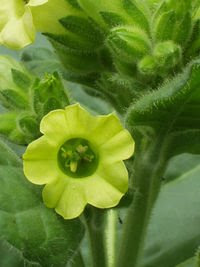 From a broad cultural point of view, the deadliest nightshade of all is tobacco (Nicotiana tabacum), which contains the tropane alkaloid nicotine.
According to the National Center for Chronic Disease, cigarette smoke is responsible for some 438,000 premature deaths each year in the United States alone, while smoking-related healthcare and lost productivity are estimated to cost our nation over 167 billion dollars a year. Globally, it is predicted that by 2020, the use of tobacco will account for some 10 million cancer deaths each year. Tobacco, regarded by its original American Indian users as a sacred plant with magical powers and by sixteenth century Europeans as a medicinal panacea, is now understood to be a dangerously addictive carcinogenic herb—the deadliest nightshade of all.
I hope you’ll find the nightshades such a fascinating family of plants that you’ll want to learn as much as you can about them. And I hope you’ll enjoy the China Bayles mystery, Nightshade, as well. If you’d like to sample the novel, you can read the first chapter here.
Thanks for joining me on this blog tour, and a big thank-you to Tina for hosting me today! I’ll be around to answer your questions and comments, so let’s continue our conversation!
~~~~~~~~~~~~~~~~~~~~~~~~~~~~~~~~~~~~~~~~~~~~~
UPDATE - March 25, 2009. Susan Wittig Albert has recreated the blog tour, but this time, the book is Wormwood, steeped in the herbal traditions of the Shaker community, another (the 17th!) delicious tale of the adventures of China Bayles. To enter the drawing, please visit this link - http://www.abouthyme.com/drawing_0325.php
Thanks - and good luck!
~~~~~~~~~~~~~~~~~~~~~~~~~~~~~~~~~~~~~~~~~~~~~
About the book drawing and Susan’s blog tour
 If you’d like to enter the drawing for a copy of Nightshade go here to register. But do it now, before you forget. The drawing for The Essential Herbal closes at noon on April 12, 2008.
Want to read the other posts in Susan’s blog tour? You’ll find a calendar and links here.

 A huge thanks to Tina, for being my host at Essential Herbal today, and welcome to blog readers! Thanks for joining us.
If you’re just joining us, this blog tour celebrates the

 launch of Nightshade, the sixteenth China Bayles mystery. China is a former criminal defense attorney who traded life in the fast lane for a quieter life as the owner of an herb shop in Pecan Springs TX. The garden isn’t always peaceful, however, and China keeps turning up mysteries. In Nightshade, the mystery centers on China’s father, who died in an auto accident 16 years before—and on China’s recently discovered half-brother Miles, who seems to have some shadowy secrets up his sleeve.
Each of China’s mysteries has a plant theme. Today’s post is the second of two posts about the plant family that lends Nightshade its name. If you missed Part One, you can read it here.
The Notorious Nightshades, Part Two
Over the centuries, the nightshade family (over two thousand species of annuals, perennials, vines, shrubs, and even small trees) has gotten a very bad rap.
But this is a pity, because the nightshades rank high on the list of plants that humans find extremely useful. Did you know that the potato is a nightshade? And tomatoes, chile peppers, eggplants, and tomatillos? People have been eating and loving (or in some cases, hating) nightshades for a very, very long time!
But nightshades aren’t just good-tasting, they’re good-looking, as well. And chances are that you’ve been growing several ornamental species in your garden, whether you know it or not.
The Delightful Nightshades
 If you’ve got petunias, you’ve got nightshades! Brought to Europe from South America in the early part of the nineteenth century, the petunia immediately captured the attention of hybridists. Now, through the magic of plant breeding, we can obtain fringed, doubled, and ruffled petunias in an amazing range of colors and markings, for garden beds or hanging baskets.
You may be growing another ornamental nightshade for its sweet evening fragrance. Nicotiana, also known as flowering tobacco, is the perfect plant to grow beside a porch or patio where you're likely to linger in the evenings. This annual also attracts hummingbirds. Desert Tropicals has some good information about nicotiana, lovely old cottage-garden flower.
 Other beautiful nightshades, Datura and Brugmansia (Angel’s Trumpet), have a more troubling reputation. While they delight us with their stunning flower trumpets, these plants contain significant levels of the tropane alkaloids atropine and scopalomine and have a long history of use in various cultures as medicines, ritual hallucinogens, and deadly poisons. I have too often seen these plants offered for sale in nurseries, with no “be careful!” notice. And too many nursery employees don’t have a clue about the toxic properties of the plants they’re selling. If you grow these beautiful but dangerous nightshades, do so responsibly, please, and guard against their misuse.
The Deadly Nightshades
Like any large family, the nightshade clan includes some very bad actors. It’s this side of the Solanum family—the dark side—that has given these herbs such an evil reputation.
Of all the plants in human use, few are regarded with as much fear as the Solanacae trio: deadly nightshade (Atropa belladonna), mandrake (Mandragora officinarum), and henbane (Hyoscyamus niger). In antiquity, surgeons used these plants as narcotics, but their high levels of tropane alkaloids also made them the weapons of choice when it came to murder. In the Middle Ages, these nightshades were used to induce the hallucinations associated with the practice of witchcraft and sorcery. Numerous superstitions surround all three plants, and their poisonous properties are legendary.
However, deadly nightshade remains the chief source of scopolamine (in some countries, mixed with morphine for use as an anesthetic in childbirth) and atropine, used by ophthalmologists to dilate the pupil of the eye and in the treatment of heart attacks. Atropine is stockpiled by the U.S. military and some hospitals as an antidote for biological and chemical poisons. While we must be careful of these deadly plants, we must also respect them for their powerful medicinal qualities.
The Deadliest Nightshade
 From a broad cultural point of view, the deadliest nightshade of all is tobacco (Nicotiana tabacum), which contains the tropane alkaloid nicotine.
According to the National Center for Chronic Disease, cigarette smoke is responsible for some 438,000 premature deaths each year in the United States alone, while smoking-related healthcare and lost productivity are estimated to cost our nation over 167 billion dollars a year. Globally, it is predicted that by 2020, the use of tobacco will account for some 10 million cancer deaths each year. Tobacco, regarded by its original American Indian users as a sacred plant with magical powers and by sixteenth century Europeans as a medicinal panacea, is now understood to be a dangerously addictive carcinogenic herb—the deadliest nightshade of all.
I hope you’ll find the nightshades such a fascinating family of plants that you’ll want to learn as much as you can about them. And I hope you’ll enjoy the China Bayles mystery, Nightshade, as well. If you’d like to sample the novel, you can read the first chapter here.
Thanks for joining me on this blog tour, and a big thank-you to Tina for hosting me today! I’ll be around to answer your questions and comments, so let’s continue our conversation!
~~~~~~~~~~~~~~~~~~~~~~~~~~~~~~~~~~~~~~~~~~~~~
UPDATE - March 25, 2009. Susan Wittig Albert has recreated the blog tour, but this time, the book is Wormwood, steeped in the herbal traditions of the Shaker community, another (the 17th!) delicious tale of the adventures of China Bayles. To enter the drawing, please visit this link - http://www.abouthyme.com/drawing_0325.php
Thanks - and good luck!
~~~~~~~~~~~~~~~~~~~~~~~~~~~~~~~~~~~~~~~~~~~~~
About the book drawing and Susan’s blog tour
 If you’d like to enter the drawing for a copy of Nightshade go here to register. But do it now, before you forget. The drawing for The Essential Herbal closes at noon on April 12, 2008.
Want to read the other posts in Susan’s blog tour? You’ll find a calendar and links here.
Selasa, 08 April 2008
Senin, 07 April 2008
Cold Sore Care
Well, I took a little break from blogging, first because we had an intensive training here at ISM and then second because I came down with a cold for a week. It was a typical cold, sore throat, a little coughing, a little achiness and stuffiness. I never like getting sick, but it's always fun to be able to try different herbal allies. I drank a lot of elder tea and made some slippery elm lozenges that I learned about from herbmentor.com.
The worst of the sickness actually came at the end of the cold - the dreaded cold sore. I was thinking about it the other day and I think cold sores are the first things that I started treating naturally when I was a teenager, so I've learned a few things over the years. This time around I even learned a few more tricks.
It's best to head off a cold sore before it starts. I've done this in several ways. The first less herbal approach is to take a lot of lysine at the very hint of the tell tale tingle that says a cold sore is on it's way. I take as much as 3,000 mg every hour until it is gone. It is usually quite effective. I've heard it explained that cold sores occur when there is an imbalance of the amino acid arganine to lysine. Arganine can be found in beer, chocolate, peanuts, and grains, so I limit my intake of these foods as well.
I've also used St. John's Wort oil, again at the very onset of a cold sore. I've used both the oil straight as well as a lip balm that I made. This tends to work some times, but isn't as effective as the lysine. I've heard that lemon balm can be effective against cold sores, but I have never had this work for me.
The last thing I use, right at the onset, is tea tree oil. I apply it with a Q-tip straight to the spot that is tingling. This is also very effective.
In my past experience, once a cold sore has formed a blister, there is very little you can do to help it go away. At this point it just has to run it's course. I have a special salve I made up of cottonwood, plantain, and St. John's Wort that does help to alleviate pain. If my lip becomes swollen I use an ice cube to get the swelling down.
I first got the virus about 12 years ago. At first I would get cold sores often and seemingly for no reason. I was in high school at the time and terribly self conscious about having the herpes virus. At first I just stayed home when I had one, but later I went on prescription drugs to control the outbreaks. (Obviously I was a little different back then.) Over the years I tend to get them less and less and now only when I am sick.
Well, as I said the worst part of the cold this time around was the cold sore. I've never had one this severe before. My lip started tingling so I start my usual regimen, but nothing worked! Not lysine, or tea tree oil, or anything. It soon became apparent that this was not an ordinary cold sore. Instead of a small sore on my lip it was going to cover my entire lower right lip and part of my chin. I watched in horror as it grew in size and pain. My lip felt like a softball it was so big. I iced it to shrink it's size, but then of course the blisters started. I can't really explain to you how incredibly gross this thing was. It was so huge and puss was literally weeping down my chin. I was applying my favorite salve, which helped with the pain, but felt like I was going to have this monstrosity for a long while.
Finally, I thought, enough is enough. I am an herbalist, the plants will help me. I started getting ideas about wanting to create some kind of bandage around the wound. I experimented a little and here's what I came up with.
I grounded red clover flowers, chamomile flowers, and rose petals into a powder. I then added a little white clay and mixed it well. To this I added a little St. John's Wort Oil and a little water to form a nice paste and then applied this to the entire area. Immediately I felt better psychologically. Instead of having this horrible gaping wound on my face I now had some beautiful plants - just like a facial. :)
I chose the herbs for what I had on hand. Red Clover for it's alterative properties and because I always think of it as nourishing for the skin (probably due it it's action on the liver, but it felt like the right thing to put in there), chamomile for it's anodyne properties, and rose petals because I needed a little beauty at that point. I really wished that I had plantain, but unfortunately I had run out.
I let the mixture stay on my face for half the day, I wiped it off, and then re-applied. I slept all night with another application, which was great because it really helped to protect it while I was sleeping. The next day I was absolutely amazed. The cold sore had all but disappeared. I had expected this to last for a least a week, so it was shocking to me to see most of it completely gone.
This cold sore made me feel very grateful to be on the path that I am. It was empowering, once again, to be able to help myself heal.
I'd love to hear other people's remedies for cold sores.
The worst of the sickness actually came at the end of the cold - the dreaded cold sore. I was thinking about it the other day and I think cold sores are the first things that I started treating naturally when I was a teenager, so I've learned a few things over the years. This time around I even learned a few more tricks.
It's best to head off a cold sore before it starts. I've done this in several ways. The first less herbal approach is to take a lot of lysine at the very hint of the tell tale tingle that says a cold sore is on it's way. I take as much as 3,000 mg every hour until it is gone. It is usually quite effective. I've heard it explained that cold sores occur when there is an imbalance of the amino acid arganine to lysine. Arganine can be found in beer, chocolate, peanuts, and grains, so I limit my intake of these foods as well.
I've also used St. John's Wort oil, again at the very onset of a cold sore. I've used both the oil straight as well as a lip balm that I made. This tends to work some times, but isn't as effective as the lysine. I've heard that lemon balm can be effective against cold sores, but I have never had this work for me.
The last thing I use, right at the onset, is tea tree oil. I apply it with a Q-tip straight to the spot that is tingling. This is also very effective.
In my past experience, once a cold sore has formed a blister, there is very little you can do to help it go away. At this point it just has to run it's course. I have a special salve I made up of cottonwood, plantain, and St. John's Wort that does help to alleviate pain. If my lip becomes swollen I use an ice cube to get the swelling down.
I first got the virus about 12 years ago. At first I would get cold sores often and seemingly for no reason. I was in high school at the time and terribly self conscious about having the herpes virus. At first I just stayed home when I had one, but later I went on prescription drugs to control the outbreaks. (Obviously I was a little different back then.) Over the years I tend to get them less and less and now only when I am sick.
Well, as I said the worst part of the cold this time around was the cold sore. I've never had one this severe before. My lip started tingling so I start my usual regimen, but nothing worked! Not lysine, or tea tree oil, or anything. It soon became apparent that this was not an ordinary cold sore. Instead of a small sore on my lip it was going to cover my entire lower right lip and part of my chin. I watched in horror as it grew in size and pain. My lip felt like a softball it was so big. I iced it to shrink it's size, but then of course the blisters started. I can't really explain to you how incredibly gross this thing was. It was so huge and puss was literally weeping down my chin. I was applying my favorite salve, which helped with the pain, but felt like I was going to have this monstrosity for a long while.
Finally, I thought, enough is enough. I am an herbalist, the plants will help me. I started getting ideas about wanting to create some kind of bandage around the wound. I experimented a little and here's what I came up with.
I grounded red clover flowers, chamomile flowers, and rose petals into a powder. I then added a little white clay and mixed it well. To this I added a little St. John's Wort Oil and a little water to form a nice paste and then applied this to the entire area. Immediately I felt better psychologically. Instead of having this horrible gaping wound on my face I now had some beautiful plants - just like a facial. :)
I chose the herbs for what I had on hand. Red Clover for it's alterative properties and because I always think of it as nourishing for the skin (probably due it it's action on the liver, but it felt like the right thing to put in there), chamomile for it's anodyne properties, and rose petals because I needed a little beauty at that point. I really wished that I had plantain, but unfortunately I had run out.
I let the mixture stay on my face for half the day, I wiped it off, and then re-applied. I slept all night with another application, which was great because it really helped to protect it while I was sleeping. The next day I was absolutely amazed. The cold sore had all but disappeared. I had expected this to last for a least a week, so it was shocking to me to see most of it completely gone.
This cold sore made me feel very grateful to be on the path that I am. It was empowering, once again, to be able to help myself heal.
I'd love to hear other people's remedies for cold sores.
GTS - one day late but hey, crocuses

Join

Gardeners, Plant and Nature Lovers can join in every Sunday, visit As the Garden Grows for more information.
While I was occupied yesterday with my annual chore (as opposed to fun) of hacking back the miscanthuses, I heard the sounds of spring peepers, bees, and my first haiku of the season which seem to come out of nowhere while I'm gardening and usually return there.
"Spring ephemeral,"
she sighed, decapitating
another snowdrop.

Hey, I don't knock the heads off my spring ephemerals on purpose! Here is a happy little scene, and if you click on the photo for the enlargement you can see the hardy cyclamen pretty well.
My happy corner,
Will it blossom tomorrow
if you are not there?
On the topic of crocuses did you notice in the first GTS photo the damage to the petals of the crocuses? I think the bees did that!
The humming crocus
invites any bee in the
neighborhood to stop.

The tommies are the pale, more ephemeral looking crocuses in the photo above.
Some people will tell you the tommies are the first blooming of all crocuses, but around here the tommies are among the first of the crocuses to bloom.
Here is an amusing bit: while I was off looking up the correct plural of crocus, I ran across this:
crocus [ˈkrəukəs]
Arabic: زَعْفران زراعي
Chinese (Simplified): 藏红花
Chinese (Traditional): 藏紅花
Czech: krokus
Danish: krokus
Dutch: krokus
Estonian: krookus
Finnish: krookus
French: crocus
German: der Krokus
Greek: κρόκος (το φυτό)
Hungarian: krókusz
Icelandic: dverglilja, krókus
Indonesian: krokus
Italian: croco
Japanese: クロッカス
Korean: 크로커스
Latvian: krokuss
Lithuanian: krokas
Norwegian: krokus
Polish: krokus
Portuguese (Brazil): açafrão
Portuguese (Portugal): açafrão
Romanian: şofran
Russian: крокус
Slovak: krókus
Slovenian: žafran
Spanish: azafrán
Swedish: krokus
Turkish: çiğdem; safran
Kernerman English Multilingual Dictionary (Beta Version), © 2000-2006 K Dictionaries Ltd.
Making and Using Herb Vinegars

The book "Making and Using Herb Vinegars" is another compilation from readers and friends of The Essential Herbal Magazine. Did you ever want to know how to make delicious (and nutritious) vinegars using herbs you're growing, or the ones showing up at the produce departments in the grocery stores? And then, once you've made them, what can you do with them? Well we've got some answers and some luscious recipes for you to try. This little book is jammed with the experise of over 20 fabulous cooks and herbalists. The novice will find instruction and the expert will find inspiration.
The following recipe is a favorite here on the hill....
First you'll need to make some hot pepper vinegar. Use white wine or apple cider vinegar (we like apple cider vinegar for this one) and pour it into a pan with hot peppers. For a quart of vinegar, use about a cup of peppers. We've used dried peppers or fresh depending on the season, and whatever hot peppers were available. Heat the vinegar to almost boiling and keep it at a low simmer for 5 minutes.
Fill a large clean bottle about 1/4 way with peppers. When the vinegar has cooled, strain it and pour it inot the bottle. Allow the vinegar to ripen for 2 weeks and it will have a nice kick.
now here's the recipe:
now here's the recipe:
Garlic Chicken
2 lbs boneless chicken breasts
2 lbs boneless chicken breasts
1/2 c hot pepper vinegar
2 T vegetable oil
2 T honey
15 cloves of garlic, peeled and split
1 oz. soy sauce
Wash chicken and cut in half. Brown in vegetable oil in a heavy skillet. Add garlic and cook a little longer - until browned. Add remaining ingredients and cook over medium heat until chicken is done and glazed with sauce. Turn chicken several times while cooking. Delicious!
Note: We usually cut the chicken into small, bitesized pieces so there is more surface area to catch all the flavor.
Langganan:
Postingan (Atom)