Sad to say I just placed the leaves in the sink. They aren't growing there! Wouldn't that be wonderful? No dishes! Ooops! That can't happen. This was the other day when I got the rose geranium jelly set up. You have to cut leaves and put them in sterilized canning jars (Put boiling water in jars for 10 minutes. Then dry the jars quickly.) and then add 2-1/8 cups of white Zinfandel wine. It does make that little extra jar, which I don't like so I use 1-1/2 cups of wine and 3-1/2 cups of sugar. I have put these measurements in parentheses. You get more wine for you to enjoy and it is delicious as an aperitif. I won't bore you with the rest, here is the recipe, enjoy!
ROSE GERANIUM JELLY
2 1/8 c. (1-1/2 c.) of white Zinfandel wine
10 to 12 large rose geranium leaves
3 T. lemon juice, freshly squeezed
3 c. (3-1/2 c.) sugar
1 package liquid pectin (3 oz.)
2 T. rose water (health food stores)
Remove stems from geranium leaves. Place wine and roses in a sterilized quart jar. Cover jar with plastic wrap and top with lid. Refrigerate for several days (two or three at most). Strain leaves from wine, discarding spent leaves. Measure two cups of wine. Any leftover wine becomes the cook’s treat.
Place wine in a three to four quart non-reactive saucepan with three cups sugar and three tablespoons lemon juice. Stir to dissolve sugar. Bring mixture to a boil over medium heat stirring constantly until mixture reaches a full rolling boil that cannot be stirred down. Remove pan briefly from heat and add pectin. Return to heat and when mixture comes back to a full rolling boil, boil hard for one minute stirring constantly. A few seconds before a minute is up, add two generous tablespoons of rose water. Remove from heat and stir and skim foam if necessary.
Pour jelly into four (4) sterilized 8 oz. jars to about ¼” from top of jar. Wipe tops of jars clean and put on clean sterilized tops and rings. (To sterilize jars, boil them for ten minutes and keep them hot until you are ready to pour the jelly.) Lids can be left in hot water until needed. Do not boil the lids or rings. Screw lids down and process jars in a boiling water bath for five minutes. Remove jars from boiling bath to racks to cool. Check the next day to be sure jars are properly sealed. If the jars are not sealed, you must refrigerate them and use them promptly. This recipe makes a little more than four 8 oz. jars.
Courtesy of Gooseberry Patch, For Bees & Me, page 291.
The content of this site is anecdotal and provided for entertainment purposes only. It is not intended as medical advice. If you are ill, please see your doctor.
Rabu, 07 Oktober 2009
Selasa, 06 Oktober 2009
Inspired by Martha!
Oh, I guess you may have been thinking Martha Stewart. Noooo, I'm talking about the hostess with the mostest (Is that a word?), Martha on the Kansas prairie and really one of the best party givers (Is that one word?) I have seen in a long time. My best friend, Mar, gave me this kit for vanilla a while back. I have made it in the past on my own and given it to her. I guess she needed more and gave me a big hint! Except it got lost in the mess that is my little part of the basement and our basement is small to begin with! You ask how could it have gotten lost? I have no clue. I have found it and the other day the Meyers Dark Rum became the basis for the vanilla in this bottle.
This is a Rose & Ivy Premium Vanilla Infusion Kit. On the sticker which was covering the cork, it read Madagascar Bourbon Vanilla. On the directions it says use premium vodka. Confused? I think I used bourbon the first time. I used Meyers Dark Rum this time. I know there are people who use vodka, but I think a dark liquid gets the vanilla off to the right start. There are three vanilla beans in the bottle. Just cut them down the center and reinsert them in the bottle. Fill with your choice of liquor, rum, bourbon or vodka and wait four to six months. Check back at the end of March next year. The vanilla should be ready. I think my friend bought this at Macy's in New York, but you can find it at Bell Buckle Country Store, Inc. from Tennessee. You can buy the kit or the ready made extract. Here is the bottle that's sitting on my shelf in the basement. There is a place to mark when you made it. Let's hope I remember to test it in March. Thanks Mar for the gift and Martha for inspiring me!
Senin, 05 Oktober 2009
Let's Get Lost on a Country Road
I wonder if the currently coming-of-age generation has ever had the chance to just get lost for a bit. I remember that it was a legitimate Sunday afternoon pursuit, giving credence to the term "Sunday driver".
Families would wander back roads in search of seasonal changes, ideas for home plantings and decor, or just to enjoy the ride and the company. As we got our driving licenses back in the 70's, we looked for remote places to watch sunsets or wildlife. We went on "know your county" rides, and made friends or ran into each other at overlooks and swimming holes. When the first gasoline crisis hit, it was the first notion that perhaps it was more than cash we were spending on those rides, and they became few and far between.
Last year Molly and I became intentionally "lost" on the way home from visiting her college-to-be. We saw amazing things! I did it again yesterday, right here at home. For an hour I chose only roads I'd never heard of before. Never going more than 10 miles from home, I saw beautifully maintained farms, hillsides and streams, valleys and meadows. It was fun and relaxing. Once a year I don't feel bad about driving aimlessly to find out what's behind the next bend.
Then I came home to realize it is gorgeous here!
The obligatory last passionflower of the season...
Vitex berries ripening in the sun...
A clutch of mums murmuring to each other. Can't you just see their faces and even make out expressions? Or is that just me?
The golden ring on the brown cones is enchanting as the setting sun hits these blossoms...
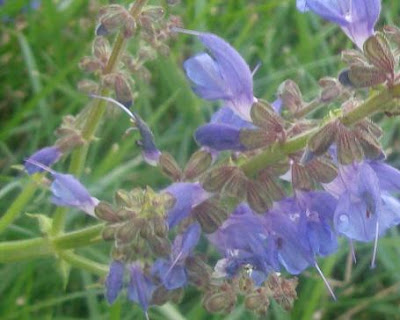
Bog sage still shows off azure blooms against the green grass.
My newest toy, the composter. It's enough to make me want to cook more fresh veggies - lol.
Last year Molly and I became intentionally "lost" on the way home from visiting her college-to-be. We saw amazing things! I did it again yesterday, right here at home. For an hour I chose only roads I'd never heard of before. Never going more than 10 miles from home, I saw beautifully maintained farms, hillsides and streams, valleys and meadows. It was fun and relaxing. Once a year I don't feel bad about driving aimlessly to find out what's behind the next bend.
Then I came home to realize it is gorgeous here!
The obligatory last passionflower of the season...
Let's Get This Party Started!
Then you should hear the needle being ripped from the record! I'm not encouraging you to drink! Actually I don't drink anymore. I make jelly from wine! We were away for a long weekend at our friends' daughter's wedding and had morning tea with Nancy Reppert at Sweet Remembrances and found wonderful herb books at The Rosemary House! It was excellent in every way, but I promise to give you wonderful information later. I'm off to use the white zinfandel for rose geranium jelly. Talk to you later!
Jumat, 02 Oktober 2009
Herbal Considerations for Cold Sores ~ an excerpt
Cold sores are a painful condition that is caused by the herpes simplex-1 virus (HSV1). Genital herpes, shingles, and the Epstein Barr virus involve a closely related virus. This article focuses mainly on HSV1.Once contracted, the herpes virus lives in nerve cells. It can be dormant for long periods of time and then become reactivated through a variety of causes including stress, depression, anxiety, an overabundance of sun exposure, reliance on stimulating nervines such as coffee or tea, fevers, menstruation, possibly food allergies/intolerance and more.
Once activated painful sores erupt most commonly on the lips, but can also affect the skin and other mucosal membranes. Most often an itch or tingle will be the first sensation of a cold sore outbreak. A red bump will shortly appear. This bump will grow and form a blister. These ulcerations can be itchy, painful and swell uncomfortably.
The herpes virus is most contagious during an outbreak, but can be transmitted through viral shedding even when the virus is dormant. Once active it is very contagious and pro-active steps can be taken to avoid transmitting it to others as well as spreading it further on your own body. To reduce chances of spreading the virus it’s important to avoid contact with the ulcerations through direct contact such as kissing or indirect contact such as touching the sores to a towel and then re-using that towel. When you have a current outbreak wash your hands frequently and especially after touching the cold sores themselves.
It is estimated that 75% of the population has the herpes virus, although many of these people are asymptomatic or otherwise do not know they are carriers of the virus.
Herbal remedies for cold sores can be thought of in four different stages.
Prevention
At the first sign of an outbreak
During an outbreak
Recovery
Prevention
Anyone who has had a herpes outbreak will understand the benefits of prevention. Cold sores are often very painful and unsightly.
The first steps of prevention can be avoiding known causes of outbreaks. If you notice that sun exposure results in cold sores take care to wear lip balm with sunscreen in it and/or a sun hat if you are unavoidably going to be in the sun for long periods of time.
Stress is a common cause of cold sores. Minimizing stress through self-nourishment such as taking time to do the things you enjoy, meditation, yoga, spending time in nature, getting restful sleep or whatever you need to do to maintain a stress resistant life can all go a long way in preventing herpes outbreaks.
However, many of us experience stress in our lives, and the reality is that stress is not going to go away. Adaptogen herbs can help strengthen our body’s response to stress and combined with the lifestyle suggestions above can be a powerful way to being more balanced health to our lives.
Adaptogens can be taken as single herbs or formulated by an herbal practitioner for an individual person.
Stimulating nervines such as coffee and tea may trigger cold sore outbreaks. If you suspect this may be causing your outbreaks, adaptogen herbs, along with slowly reducing the frequency of stimulating nervines may help to reduce the dependency on these “pick-me-ups” and reduce the number of outbreaks.
Examples of herbal adaptogens:
Licorice (Glycyrrhiza glabra) is usually added in small amounts to formulas, this sweet herb is commonly used in Chinese medicine especially and has been scientifically proven to be effective against the herpes virus.)
Holy Basil: (Ocimum sanctum) A highly revered herb from India it also has anti-viral capabilties
Ashwagandah (Withania somnifera)
Shatavari (Asparagus racemosus)
Eluethero (Eleutherococcus senticosus)
Codonopsis (Codonopsis pilosula)
Schizandra (Schizandra chinensis)
![]() |
| Holy Basil |
Examples of lifestyle adaptogens:
Yoga
Meditation
Time spent in nature
Deep breathing
Exercise
Joyful activities
Relaxing nervines can calm the nerves during acute situations of anxiety or stress.
Chamomile (Matricaria recutita)
California poppy (Eschscholzia californica)
Passionflower (Passiflora incarnata)
Lavender (Lavendula officinalis)
Skullcap (Scutellaria lateriflora)
![]() |
| Passionflower |
Building a strong immune system can also prevent outbreaks. This includes all those things we know we should do for ourselves such as whole fresh foods, a good balance of proteins and healthy oils, plenty of restful sleep, exercise, and joy. Certain nutrients support our immune system and are a beneficial part of the diet. Vitamin C can be found abundantly in rose hips, pine needle leaves and dandelion leaves. In fact, a good amount is found in most leafy green vegetables. Building the immune system may also include optimal vitamin D levels and the support of immunomodulating herbs.
Examples of immunomodulating herbs
Astragalus root (Astragalus membranaceous): One of my most relied upon herbs for maintaining health. We add several handfuls of the roots to large pots of simmering bone broth or small handfuls to herbal chai mixes.
![]() |
| Astragalus roots |
Elderberry (Sambucas nigra. S. canadensis) This delicious berry can be prepared as a syrup, elixir, jelly, or tincture and can be taken daily to support the immune system.
Reishi mushroom (Ganoderma lucidum) is an adaptogen as well as immunomodulator that has demonstrated activity against HSV.
![]() |
| Reishi mushroom |
Dietary suggestions: Eating lysine rich foods and avoiding foods high in arginine.
The amino acid arginine has been implicated in herpes outbreaks. The virus actually needs arginine to replicate and may even stimulate the virus. Lysine blocks arginine and can help prevent outbreaks.
Lysine rich foods include:
Meat (turkey, beef, chicken, turkey)
Milk and cheese
Eggs,
Fish
Foods high in arginine include:
Nuts
Brown rice
Wheat
Oatmeal
Chocolate
Beer
Anti-viral herbs
![]() |
| St. John's Wort |
Garlic (Allium sativum.)
St. John’s Wort (Hypericum perforatum)
Lemon balm (Melissa officinalis)
Cedar (Thuja occidentalis)
Licorice (Glycyrrhiza glabra)
Aloe (Aloe vera)
Elderberry (Sambucus spp.)
Echinacea (Echinacea spp.)
Reishi (Ganoderma lucidum)
![]() |
| Echinacea purpurea |
At the first sign of an outbreak:
If preventive steps fail and you feel the onset of an outbreak there are several things you can do to help either stop the outbreak or lessen the symptoms.
Internal Treatments:
Take regular teas and tinctures of anti-viral and immunomodulating herbs as listed above.
Large doses of lysine supplements at the first sign have been helpful for me in stopping an impending outbreak. I may take as much as 4,000 mg every half hour until the outbreak has abated. This can make one nauseas on an empty stomach. If you take too much lysine loose stools will develop.
![]() |
| St. John's Wort Oil |
St. John’s Wort oil or tincture can be applied liberally and frequently. If applied often enough one can stop an outbreak entirely.
A freshly sliced clove of garlic apply directly to the sore can stop it from growing, but beware garlic is spicy even when used topically and can cause burning and moderate discomfort.
Essential oils:
Many people successfully stop cold sore outbreaks by applying essential oils to the sores themselves. They may be diluted in a carrier oil to avoid irritation. Essential oils often used include tea tree oil, lavender, lemon balm, and thuja. Please keep in mind that essential oils are not for internal use and can cause irritation when applied externally.
Through all this remember to rest. Your body is not fighting a viral infection and can use rest and support of immune system functions.
Herbal options for a cold sore outbreak
If the above suggestions still result in an outbreak there are multiple herbs and other resources to lessen the pain and speed healing.
St. John’s Wort continues to be helpful during an outbreak. It can be taken internally and used externally.
Calendula is an effective wound healer. It can be applied as an oil or tincture.
Aloe Vera is anti-viral and a fabulous vulnerary. The gel from the inside of the leaves can provide instant cooling relief to the pain and discomfort of cold sores.
Plantain (Plantago major) can be applied as a poultice, salve, or tincture to speed healing time.
Swelling
If there is significant swelling ice can be applied to the wounds. You can also make tea and freeze the tea in ice cube trays for an added kick. I especially like to do this with licorice root, but many anti-viral and vulnerary herbs could be used such as lemon balm, calendula, St. John’s Wort, etc.
Weeping
If there is pus weeping from the wound you can make a clay poultice and apply that to the sores.
Clay poultice for cold sores:
1 tsp French green clay
½ tsp powdered licorice root
½ tsp powdered rose petals
To this add enough St. John’s Wort tincture to create a clay plaster. You can add a little St. John’s Wort oil to this mix to avoid the mixture from drying too quickly. (Water can also be substituted) Once it reaches a good consistency it can be slathered over the sores. I’ll warn you that this clay poultice is not a pretty sight but is a good option when sores are weeping especially at night in order to sleep more comfortably.
Astringent herbs can also be helpful topically for weeping sores. A simple remedy for this is to briefly wet a black tea bag with hot warm, let cool slightly and then apply that topically to the sore.
Again, during an outbreak remember to rest. Your immune system can use the help.
Recovery
Cold sore outbreaks can last anywhere from a couple of days to a full week. As the sores heal and new skin is formed take the time to fully recover. Review the recommendations for prevention and adopt them into your life as you can.
![]() |
| Milky oats tincture |
Kamis, 01 Oktober 2009
Guest Blogging for The Herb Companion Magazine!
My latest post for The Herb Companion magazine is related to one of my favorite herbs, rosemary. This one happens to be from Spain. Very envious of rosemaries in tropical places! You know that one of my passions is jelly especially this time of year. Wrote about this subject in my blog last year, but it bears repeating. Here is the link. Hope you enjoy it!
October Blog Party: Bio-regional herbs for Colds and Flu
In this month's herbal blog party, herbalists all over the United States stepped out their front doors to find powerful bio-regional plants that can support us through the cold and flu season.
Thanks to all who participated - I've really enjoyed these posts.
Drumroll....
Sean Donahue looks at Swampy Medicine for Swampy Lungs
Cory Trusty with Aquarian Bath shares her experience with elderberry and the H1N1 virus.
Tina Sams from the Essential Herbal Magazine gives us her perspectives from a PA German heritage.
Kristina Bentley beautifully shares her Wintergreen Experiments
Darcey Blue gives us a fresh perspective on Butterfly Weed
Kiva Rose categorically explores many southwest native plants and weeds in the Elder Mother's Pantry
Julie Charette Nunn expands upon herbal relationships and the immune system
Amanda gives us very important prevention strategies for the approaching season
Kristine Brown beautifully illustrates some of her favorite local herbs
I meander out my front door to photograph harvesting and preparing Balsamorhiza sagittata
Gabriel shares how she will be caring for her family during the cold months
Gail discusses two plants for colds and flu in Wyoming
Stephany shares her experiences with Growing you Own Medicine
Thanks to all who participated - I've really enjoyed these posts.
Drumroll....
Sean Donahue looks at Swampy Medicine for Swampy Lungs
Cory Trusty with Aquarian Bath shares her experience with elderberry and the H1N1 virus.
Tina Sams from the Essential Herbal Magazine gives us her perspectives from a PA German heritage.
Kristina Bentley beautifully shares her Wintergreen Experiments
Darcey Blue gives us a fresh perspective on Butterfly Weed
Kiva Rose categorically explores many southwest native plants and weeds in the Elder Mother's Pantry
Julie Charette Nunn expands upon herbal relationships and the immune system
Amanda gives us very important prevention strategies for the approaching season
Kristine Brown beautifully illustrates some of her favorite local herbs
I meander out my front door to photograph harvesting and preparing Balsamorhiza sagittata
Gabriel shares how she will be caring for her family during the cold months
Gail discusses two plants for colds and flu in Wyoming
Stephany shares her experiences with Growing you Own Medicine
"For man, autumn is a time of harvest, of gathering together. For nature, it is a time of sowing, of scattering abroad."
- Edwin Way Teale
- Edwin Way Teale
Balsamorhiza sagittata: a local emblem and ally for clearing dampness
Cold and flu season is upon us once again. Tonight I’ll be teaching a 3 hour class on prevention and staying healthy during these cold months. Taking pro-active steps for health by eating whole fresh foods, getting appropriate rest, maintaining optimal vitamin D levels and supporting our bodies with nourishing herbs are some of the most important steps we can take in our daily lives.
But what happens when we do get sick? Sometimes it’s appropriate to visit your family doctor. Sometimes it’s appropriate to visit your local health food store, but many times the support we are searching for can be found right outside our front door.
I live in the epic Methow Valley in the Northeastern Cascades of Washington State. While I live in the heart of a Ponderosa pine and Douglas fir forest, a short distance from my house exist many other ecosystems including the dry shrub step rich in sage brush, alpine meadows covered in edible and medicinal wildflowers, and even agricultural land full of beneficial weeds.
This varied landscape offers a myriad of plants both historically and scientifically proven to help with a variety of cold and flu symptoms. The “Big Medicine” of Lomatium dissectum is the strongest medicinal plant of the Northwest according to Michael “Skeeter” Pilarski. It has a strong history of being use specifically for influenza and is even being studied for effectiveness against the HIV virus.
Osha (Ligusticum canbyi) can be found in our alpine meadows. With a strong affinity for the respiratory tract this warming and drying root can open airways and clear dampness from the lungs.
This list of plants could continue on and on, (Sagebrush, yarrow, chokecherry, mullein...) but instead I chose to focus on the emblem of my home, Arrow leaf balsam root, (Balsamorrhiza saggitatta).
In Late April through May the large sunflowers blaze across the valley transforming dull hillsides into radiant yellow meadows. Besides being an important medicine, this plant offers us nourishment as food. I’ve written more about that here.
It’s during this time of year however, that I am searching out the roots for medicine. The vibrant foliage of the balsam root has long since died away, but the plethora of crispy brown leaves and flowers stalks radiate from the center root leading to the resinous root beneath the surface.
The amount of foliage indicates how big the root will be. I search for one that is big enough to fill my jars with their strong roots, but small enough that I can easily work with it.
Digging balsam root is an arduous activity that can take a long time.

We use a traditional style digging stick called a cupins. Instead of fire hardened wood, the curved stick portion is iron. Specially designed for harvesting roots, it works by loosening the soil around the root without risking cutting into the root itself. For dry, rocky soil this tool is indispensable.
The root consists of a fibery center and a hard outer bark. Depending on the age of the balsamroot it can be a small as a pencil to even as large as seven feet. My preferred sized to harvest is about the size of a large carrot. Much bigger than that and I don’t have the appropriate tools to cut it down in size.
Cutting into the root you will find it oozing with resins. The scent is reminiscent of the sap that oozes from pine trees. Aromatic and sticky this makes for potent plant medicine. I like to tincture it fresh in 95% alcohol.
Balsamroot is warming and drying making it suitable for damp coughs. As an anti-microbial it works fabulously as a sore throat spray that combines well with cottonwood buds.
Michael Moore in his book Medicinal Plants of the Mountain West says it makes really good cough syrup. Simply warm a cup of the root with 3 cups of honey in a sa
ucepan, allow to cool, gently reheat again, allow to cool, and then reheat gently again, strain while still warm and runny.Many herbalists describe balsamroot as being an analogue to echinacea’s immunomodulating effects. I like to include it in an alcohol extract of elderberries and osha to be taken at the first sign of illness.
Balsam root seems to be very effective for people with lingering productive coughs that last beyond the illness itself.
Without fail these types of coughs have cleared within a day or two of regular dosings.
Bio-regional herbs for the Cold and Flu Season
The Essential Herbal Magazine is pleased to be participating in a blog party hosted by Methow Valley Herbs. Visit Rosalee's blog for a list of other participants and read their takes on the topic!
Here in PA, I am most familiar with the PA German culture, and the things that my mother and her parents knew about.
Here there is a centuries old way of healing called "pow wow" or Braucherai that blends the German, Native American, and Gypsy ways. It combines herbal medicine with ritual and was passed down through the generations. My friend Susan Hess has joined forces with others to record it before the old-timers who practice it are gone. They can be found here and you can read an article about them here.
The thing is, at one time, pow wow was something that everyone knew about, and most people knew at least one person whose life was saved by a practitioner. My mother was one such person, when as a small child the medical community gave up on her and her parents took her to see a man who chanted over her and used a few herbs - possibly burning them near her, she didn't recall.
Then, the Amish and Mennonite families who had always depended on this healing model became ashamed of it after a scandal in brought the attention of the modern world, and scorn and mockery came their way. Nobody spoke of it anymore, and nobody wanted to learn it. 2 generations or so later, and it is scarce and hard to find.
Otherwise, we have been relearning the herbal part as has most of the country. For cold and flu our favorite defense has always been elderberry because it is so good and so easy to make, use, find, store, etc. Once you have foraged elderberry with a seasoned herbalist, you will never have a hard time finding it again. It is on every backroad, every meadow, every woodlot. We use it in wines, vinegars, syrups, jellies, tinctures, and most recently I've been making hard candy so that I can have it with me wherever I go.
We recently spent a day with Barb and Fred Will in western PA, where we gathered lots of boneset for tincture. He told us that when he was growing up, each family had a crock where they kept the boneset for tea, and that because of the nasty taste, all the kids liked to pretend that they weren't sick until they just HAD to admit it. The tincture is extremely bitter as well, and I usually combine it with elderberry.
Some other easily grown anti-viral herbs that we also have in tincture form include lemon balm and St. John's wort. We use echinacea to support the immune system, and also a combination of holy basil and albizzia to help our bodies manage stress. Stress and the way we handle it can make a huge difference in our health and our immunity. Holy basil is not native here, but the albizzia trees are everywhere in the summer.
Eat well, get plenty of rest, and stay hydrated - and keep some good anti-virals on hand.
Here in PA, I am most familiar with the PA German culture, and the things that my mother and her parents knew about.
The thing is, at one time, pow wow was something that everyone knew about, and most people knew at least one person whose life was saved by a practitioner. My mother was one such person, when as a small child the medical community gave up on her and her parents took her to see a man who chanted over her and used a few herbs - possibly burning them near her, she didn't recall.
Then, the Amish and Mennonite families who had always depended on this healing model became ashamed of it after a scandal in brought the attention of the modern world, and scorn and mockery came their way. Nobody spoke of it anymore, and nobody wanted to learn it. 2 generations or so later, and it is scarce and hard to find.
Otherwise, we have been relearning the herbal part as has most of the country. For cold and flu our favorite defense has always been elderberry because it is so good and so easy to make, use, find, store, etc. Once you have foraged elderberry with a seasoned herbalist, you will never have a hard time finding it again. It is on every backroad, every meadow, every woodlot. We use it in wines, vinegars, syrups, jellies, tinctures, and most recently I've been making hard candy so that I can have it with me wherever I go.
We recently spent a day with Barb and Fred Will in western PA, where we gathered lots of boneset for tincture. He told us that when he was growing up, each family had a crock where they kept the boneset for tea, and that because of the nasty taste, all the kids liked to pretend that they weren't sick until they just HAD to admit it. The tincture is extremely bitter as well, and I usually combine it with elderberry.
Some other easily grown anti-viral herbs that we also have in tincture form include lemon balm and St. John's wort. We use echinacea to support the immune system, and also a combination of holy basil and albizzia to help our bodies manage stress. Stress and the way we handle it can make a huge difference in our health and our immunity. Holy basil is not native here, but the albizzia trees are everywhere in the summer.
Eat well, get plenty of rest, and stay hydrated - and keep some good anti-virals on hand.
Langganan:
Postingan (Atom)