Jumat, 23 Juni 2006

Lavender and roses


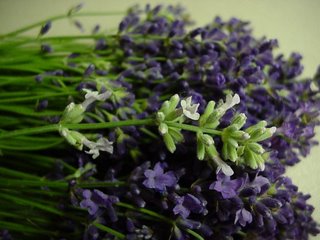
Everything is blooming its heart out this year. I wanted to try to photograph the subtle pastel pink of the 'Jean Davis' lavender, but can't seem to get it to show up in the picture. So I brought some indoors and put a sprig on top of a bundle of L. angustifolia. At least you can see the contrast.

And the roses are so loveable. I grow a dozen or so old garden roses, having had my fill long ago of the high maintenance ladies.


My rose list:
Rosa eglanteria (the eglantine rose)
r. rubra (or is it r. glauca?)
'The Fairy'
R. rugosa alba
R. rugosa rubra
R. canina (the dog rose)
'Konigen von Danemark'
'Madam Hardy'
'La Reine Victoria'
'Reine des Violettes'
'Mme Isaac Perriere'
R. gallica versicolor 'Rosa Mundi'
'Salet' (moss rose)
'Tuscany' (a gallica)

I like to bring favorites indoors to put on my bedside table and at the kitchen sink in small vases. Don't mind the dust... I've been in the garden!

Kamis, 22 Juni 2006

Daylily buds and berries!


Everything is just a little bit early here. I've been picking berries like crazy, because they are two weeks early and took me by surprise. Usually by now I've got the stands all staked out and am keeping an eye on them. This year, they exploded without warning. They are plump, juicy, and BIG!
The daylily buds are in the midst of their own fleeting season, as well. If you've never had the pleasure of tasting a daylily bud, don't wait another year! My favorites are the small ones with little to no orange - just green. They taste a lot like beans to me, but "more". I like to add them to salads, munch them raw when I find them in the woods, or throw them into a stir fry. I've read that some people can get a bit of an upset stomach from them... I think it was Peter Gail who mentioned that possibility in his book about daylilies. It has never been an issue for me, but bears mentioning. All parts of the daylily plant are edible, and the flowers are dried and used in some Asian dishes. Peter was kind enough to send several dandelion recipes for the Wild Foods for Every Table book. We've been getting lots of reviews for the book since it hit the mail on this past Monday. So far, it has all been good and they are flying out of here.

Recipe: Purple Lavender Punch


Breathe deeply. Put on a hat. Time to harvest the lavender.
This was a pretty good winter, not too wet. I grow lavender with varying degrees of success. The plants in my front yard do better than the plants in my herb garden, a testament to the "right plant in the right place" philosophy. In short form: the front yard is sunnier, and the plants are hybrids. The herb garden has it's own advantages for other herbs, but I have to admit, there is less sun there. And the plants were grown from seed: to save money I played the "vera" roulette. Angustifolias are the tastiest and sweetest smelling of the Lavandulas, in my opinion, but the hybrids in the front yard look impressive with their long stems and fat buds.
(The photo is from the state of Washington.)

Here is an unusual punch recipe. Most of the time, lavender punches rely on lemonade as a base. Of course, decorate pitcher with a little beribboned bundle of lavender sprigs.

LAVENDER PUNCH

1 cup water
1 cinnamon stick
1/2 tsp whole cloves
3 T fresh lavender flowers (OR 1 T dried lavender)
1 (6 oz.) can frozen limeade concentrate
2 cups Concord purple grape juice

1 lime, sliced
1 liter bottle club soda, seven-up, or ginger ale, chilled

In covered 1 quart saucepan, heat water, cinnamon, and cloves to boiling.
Simmer over low heat 5 minutes; remove from heat.
Add lavender flowers. Cover and let stand 10 minutes to steep.
Strain the brew into a bowl and discard the particles.
Stir frozen limeade concentrate into the brew until melted and add
grape juice. Cover and refrigerate.
Just before serving, pour into large pitcher.
Add lime slices and ice.

Selasa, 20 Juni 2006

blessed to be boring

Being Boring
by Wendy Cope

"May you live in interesting times."
-ancient Chinese curse

If you ask me "What's new?", I have nothing to say
Except that the garden is growing.
I had a slight cold but it's better today.
I'm content with the way things are going.
Yes, he is the same as he usually is,
Still eating and sleeping and snoring.
I get on with my work. He gets on with his.
I know this is all very boring.

There was drama enough in my turbulent past:
Tears and passion—I've used up a tankful.
No news is good news, and long may it last,
If nothing much happens, I'm thankful.
A happier cabbage you never did see,
My vegetable spirits are soaring.
If you're after excitement, steer well clear of me.
I want to go on being boring.

I don't go to parties. Well, what are they for,
If you don't need to find a new lover?
You drink and you listen and drink a bit more
And you take the next day to recover.
Someone to stay home with was all my desire
And, now that I've found a safe mooring,
I've just one ambition in life: I aspire
To go on and on being boring.

Senin, 19 Juni 2006

July/August '06 issue is out!

The latest issue of The Essential Herbal is in the mail. Full of all sorts of recipes - tomatoes, roses, thyme, lavender, and lemon in particular, and lots of info on gardening and what to do with that garden bounty. Karen Hegre of Black Hills Herbs & Aromatherapy debuted a new column to help parents share their love of gardening and herbs with their kids. That should be a lot of fun. Almost as soon as the magazine was in the mail, I took a few days off to visit the beach and came back just in time to pick up the finished Wild Foods for Every Table and get the pre-ordered copies into the mail today as promised. There are still a few strays that need to go into the mail, and then we'll get serious about the move. It is getting hard to accomplish anything - with half of the office here and half there.

Tina James does her thing


I don't claim to take good photos, but the 'Tina James' primrose is worth sharing...
It's an Oenothera, and the interesting part is that several blossoms will suddenly but predictably open every evening beginning in midsummer. June 17th began the show this year, although some volunteer seedlings I have transplanted to another location in the yard have been doing their thing for a few days already.


The third picture is of the blossoms after the show, you can see the light conditions have changed from twilight to dusk. She'll bloom all night for the night flying insect pollinators, and into the next day, but by the time noon rolls around the blossoms are drooping.

Kamis, 15 Juni 2006

Hummingbirds

Here are some odds and ends of information about hummingbirds that I collected over the years from various bulletin boards and mailing lists...
(March 2002 From Liz on the Front Porch @ Yahoo)
Put a banana peel out to attract flies and other insect near feeders. Hummers need protein as well as nectar. Especially when they have young to feed. The rotting banana peel gives them a wonderful source of insects. I don't put all the peel out at one time. I cut it up into pieces which we keep in the freezer till a new one is needed.
Sounds gross but works.
Also do not take down any spider webs next to your feeders. The mommy hummers get tiny gnats for their young from the webs.

So far as attracting migrating hummers, use wide red ribbon on branches of trees near feeders. You can also put the ribbons on poles around the feeders. The fluttering of the ribbons helps attract them. Did not believe this till we tried it, wow, we got hummers. Had moved into this house and felt the hummers would not know where the feeders were. We put red ribbon streamers about 2 feet long from the branches of the pine tree. They found that one first. Also tied it to clothes line where one feeder was hanging, also the satellite dish. The next year we put out more feeders with the ribbon near the new feeder. The old hummers came to the unmarked feeders and new hummers came to the new feeders with ribbon. We have as many as 10-12 feeders on the half acre of land.

Some people use "surveyor's tape" available in hardware stores. Supposedly the hummers like ultraviolet light, which the tape reflects.

Check migration charts on hummingbirds. This can be done on:
www.hummingbird.net
This site also has interesting information on hummingbird moths.

My recommendation is not to buy nectar either in dry or wet form. It is so simple to make your own. There is no need to make the nectar red to attract hummers. DO NOT USE FOOD COLORING IN NECTAR!!! Also do not make the home made nectar strong than 1 part sugar to 4 parts water - it is not healthy for the hummers.

Another hint is not to put much nectar in each feeder. This will not waste as much and there will be less cleaning with the liquid not going as high into the feeder. We generally do not go through more than about 2 oz. per changing.

My personal favorite hummer feeder is No. 203-CP of Perky Pet: it is 8 oz. glass feeder with bee guards and perches. We also use the little plastic tube feeders that have no perch and one feeder. We use about 8 of these during the summer. They are easier to clean the the perky glass feeders. We use a nylon scrubber with handle that has a scouring pad on the end to clean the little tubes. Some people use them to clean glasses or glass coffee pots.

Under no circumstance is detergent or soap to be used. If there is a great deal of mold use a weak solution of bleach, let sit over night, but rinse thoroughly.

Remember to clean feeders twice a week no matter of cool temperatures. Sometimes as often as ever other day in very hot weather. When the nectar begins looking weird, a thin film inside feeder, clean feeder.
Have never seen a drunk hummer so don't know if it ferments till the alcohol level goes up or just till it spoils.

The hummers like feeding in cool areas during the summer. They prefer shade because they can spot other hummers and can give chase quickly. Looking into the sun does not aid them in watching for intruding hummers. Also nectar gets much too warm during the summer. Having the feeder in the shade, there will not be the expansion and contraction which causes the nectar to leak.

To ward off ants that will invade the feeders use ant traps with bakers non stick spray on inside of trap. Or put water in ant trap. The water can be drunk by other birds so the spray is more preferred. When it rains the spray causes a film on the top of the water. The ant trap needs to be kept clean of dead bugs and debris.

Always put the feeders out at least two weeks before they arrive. Many of them travel through and are not seen feeding while going further north. They eat and run.

You can tell the fledgelings from the mature birds. The young ones do not know how to perch. Usually be the end of summer they are beginning to learn.

Hummers also like to eat from the Oriole feeders. They do not weigh enough to make the bracket go down, but they still can get they tongue in there to sip.

Here is a list of some of the flowers that will help provide hummers with natural nectar.

Annuals:
Beard Tongue (and other penstemons)
Fire Spike
Fuchsia
Impatiens
Jacobiana
Jewelweed
Petunia
Red Salvia
Scarlet Sage
Shrimp Plant

Perennials:
Bee Balm (Monarda)
Canna
Cardinal Flower
Columbine
Four-O-Clocks
Hosta
Little Cigar
Lupine
Penstemon
Yucca
(Ym-health's Note: Hummingbirds always show up here when the coral bells first bloom, also crabapple trees.)

Trees or Shrubs:
Azalea
Flowering Quince
Lantana
Manzanita
Mimosa
Red Buckeye (these are large trees, and feed dozens of birds at once in
the early spring.)
Turk's Cap
Weigela

Vines:
Coral Honeysuckle
Cypress Vine
Morning Glory
Trumpet Creeper

Remember that hummers can not smell so they are drawn by the flower color.
Also wild flowers not hybrids produce the most nectar.

Here is the site for the hummers: wwww.hummers.net
Over on the right hand side of the home page is the migration map site. Click on it and this year's site will come up. You can also pick another year to compare when they arrived previous years.

Last year they were a week earlier. I put my feeders out a couple weeks before they are supposed to arrive here because some are going north who need to feed. Once in a while they will get them north of here before we get ours that stay all summer. So we get the visitors who just "eat and run". This is also why during the first couple of weeks when your hummers come back there seem to be so many of them. There are travelers who will stay just long enough to gather so fat to go further north. The males ALWAYS come north first. They have to find food sources before the females arrive.
Then all summer long it is a constant battle of those possessive males to keep the females away from the feeders. This year we are putting some of the feeders down by the front window below where the male can spot the female. She goes below the front window inbetween the shrubs and window and flies slowly over to the feeder. When she sees him off chasing another male she pops up and drinks. This year there are going
to be so many feeders all over that he is going to be doing nothing but chasing. Ha! If I put the feeders at least twenty feet apart and about eight of them he is not going to be able to protect them all. He sits on this one bare branch. He thinks he can see both feeders on the front side of the house. On the backside of the tree where he can't watch we have another small feeder. Behind the pine tree is another. Across the street at the mail box is another. The yucca plant by the blossom stem
is one. At the telephone poll another. Oh we have his goose cooked.
There is only one dominate male in the front. There are at least five in the back yard. There are always more females than males around. Since they like having a harem. Nothing like having your fun and driving the female off to raise the young. Nasty self absorbed males.

- I usually don't see many hummers at the same feeder at one time. They are constantly battling. It is a male domination thing. There is one male per feeder usually. I try to put them far enough apart that the male does not want to travel too far between feeders. That way he will only protect the one. After the females arrive they gang up on the male. They take turns in having the male chase them while the other feeds. The young ones learn this also. In one day there can be as many
as 24 hummers from about a 3 acre space. One female came from the backyard across the highway. Kept wondering when she was going to get hit by a semi. She always flies low to avoid the male spotting her.
The old male out front must be loosing his hearing. Not only do they watch by sight for other hummers they listen. He does not seem to be able to hear them sneaking to his feeders.

(September 2002, Liz)

Where does the time go? Have finally figured out the little tiny hummers left around here are the females and the last fledglings. The heavy males who have been at the feeders and have their traveling weight have taken off already for the south. Those little stinkers. They arrive down south earlier than the rest to take over the feeders down there. Of course I've been told they don't fight down south because there is no breeding going on, they get along just fine. Here's what it says on the hummer site:
"The southward migration is much more diffuse and extended than the northward, with some adult male Ruby-throats heading south as early as July 1, while the juveniles may not leave until November (depending on latitude)."
Thank heavens mine did not leave as early as July 1. I would have missed them like crazy. I get the hummingbird blues when they all fly south.

Rabu, 14 Juni 2006

another reason to grow your own lettuce

I'm really gung-ho about growing our own lettuce in the cold frame. But, we still haven't fine-tuned the technique for getting a steady supply. Sometimes a seed failure or inattention of one kind or another causes a gap in the production. But we do like a salad with dinner.
I really like the convenience of bagged salad greens to fill in the gaps, but here is a frightening bit of information: after ground beef, most e-coli infections are caused by tainted bagged lettuce.

Over the last five years or so, food safety experts have noticed a real increase in the number of outbreaks that were traced back to fresh produce. Outbreaks of E. coli 0H157 are always a serious public health issue. E.coli can debilitate, it can kill.

The Food and Drug administration says there have been at least 19 food borne illness outbreaks linked to leafy greens, including raw spinach, since 1995 — 425 people have become seriously ill, and two have died.

E.coli comes from animal or, sometimes, human feces and is usually associated with undercooked ground beef. E.coli in beef is usually killed by thorough cooking, but if fresh lettuce is contaminated by E. coli, the person eating it is likely to get very sick.

Finding how E.coli is contaminating lettuce is a lot like trying to find a needle in a haystack. There are millions of acres of lettuce, and thousands of workers, processors and shippers involved in bringing salads to American tables.

Because unlike ground beef or unlike some other products, there is no heating step, so there are opportunities for contamination all the way from before the product is even planted, right up unto the consumer’s table. It could be something as simple as a deer walking through the field that contaminated a few heads or it could be from a flooding. Or it could have been an ill food worker.

How to protect yourself from E. coli in purchased lettuce

— Be sure you wash your hands before handling lettuce or any raw produce...especially if you have been in contact with any raw meat.
— Even though most of these bag salads are pre-washed and labeled “Ready to eat,” experts say it doesn’t hurt to wash it again.
— Keep that salad refrigerated.
— Check the expiration date before you eat it. Even if the lettuce looks good, you should know E.coli can grow quickly in greens that are deteriorating.

http://www.msnbc.msn.com/id/12536902

Sabtu, 10 Juni 2006

What's happening at The Essential Herbal?

We're moving! That's what's happening at The Essential Herbal! Yesterday I was hauling a load of stuff to the new place, and stepped out on the back deck with the camera. There was a storm brewing, and it was the first time I noticed that we will be on top of the world.
The clouds were swirling in many different colors - pink, blue, purple, and a patch of aqua! It was as if I was standing in the middle of the clouds and could touch them... like flying through them in a plane. Anyhow.. scary and beautiful at the same time.
The first picture shows the patch of dirt that has been tilled and now has beans, brocolli, leeks, squash, many annual culinary herbs, and a row of lavender. There are a couple eggplants to go in, and some banana peppers.
This shot is looking straight out the back of the house. The silos are the next farm over, and then the farms on the horizon are several miles away. We do have some neighbors close on the sides, but the view is so stunning. Looks like the deck will be seeing lots of me. My office window looks out over this same vista. The trees are various conifers that my sister's husband grows for landscapers and Christmas trees.
They live down the hill to the right - in the hollow (their farm is called Frog Hollow Evergreen Farm). It isn't visible because of the lush growth, but Maryanne's soap and glass studio is right down there. We haven't decided exactly where the still will be set up, but either way, we have space to do just about anything.
The fence in the back has also been planted with lots of heirloom tomatoes, heirloom peppers, passion flower vine, perennial herbs and watermelon vines.
I am having an absolute blast... and once I get the next mailing out, moving will get serious.