Minggu, 13 November 2011

Earnestly Autumn

Mornings around here are usually pretty laid back. As I pushed back the curtains to let in the day, it was clear that this would be a beauty. Staggering out to the kitchen to start the coffee, the sun shining though the maple cast a decidedly autumnal glow in the room.
One cup down, and the sun pulled me outside to look around.
Fortunately for all of you, there is no picture of that. Various layers of seriously unmatched clothing, hair sticking out at odd angles, and that whole, "what? I just got up!" look combined for what I am certain would scare children and small animals. A lack of neighbors can do funny things to a woman.
There are still a lot of violets growing in the yard. Mostly violets work on seeds at this time of year, but there is always a very small fall bloom, making the beauty of those blossoms all the more sublime.
The leaves have left the fig tree, but there are a few figs hanging on. These are the sweetest of the season. The buds are already waiting for next spring, and I admire the strength of them.
Blueberry leaves have a clear jewel-toned red that looks almost like fire at the far end of the yard. They are more striking than almost any flower that blooms in the summer, made even more so because they show this color when the landscape becomes nearly stark.
An echinacea somehow found her way to the back border from the front garden. The extended sunshine out back has suited her well.
The vitex berries stand against the vibrant blue sky. I've harvested a couple of times so far this year, and will probably gather some more later today to start another jar of tincture.
Tiny leaves of cleavers clump close to the earth. I adore the way this plant grows. Stem, then a row of leaves like a green flower, stem through the center of that, and it repeats all the way to the end. Even these tiny plants have that tacky feel when you run your fingers through them, the tiny prickles are already there.
The shaggy cones of the Douglas firs are covering the trees. It is an odd year out there. Some of the conifers have lots of cones while others barely have any. Not sure what to make of that - particularly since we were so flooded during the woolie bear caterpillar time this year. Never did see one of them! Usually I combine what they look like with the cones to come up with my own personal forecast. It's going to be a surprise, I guess.
I am THRILLED that this little stinging nettle plant is here. It is my third try at this plant, and the other two didn't pan out. This one is tucked in between the anise hyssop (could be a problem later since the leaves are vaguely similar...) and the porch so I can keep an eye on it. Earlier in the fall my brother-in-law lent a hand at the end of year garden chores, and this poor plant was whacked to the ground (along with my witch hazel and experimental hardy passionflower), but hopefully everything will recover with good strong roots.
The Bradford pears out front will eventually be replaced by some useful trees. One of them was split during the hurricane this year, and they just aren't very strong. It would be better to have fruit or medicinal trees out there taking up space. In the meantime, I have to say that their foliage is a thing of beauty. So many colors and shades on a single tree.
Next to the door, a barberry is a riot of reds, oranges, and yellow. A rusty colored mum plant struggles to compete.
It won't be long before the yard turns a pale straw color and the sky tends to steely gray. Winter is coming. The tree fields here a filled with families choosing the trees that they will come back for in another few weeks to decorate in their homes. Each day is so very special right now, so filled with the last precious glimmers of plant life for the year before they snuggle down into their roots to regain strength for another growing season. As they do, in some ways we humans will do the same. We'll settle in for the winter, planning and regrouping, learning and studying, so that we'll be ready for them when they return.

Sabtu, 12 November 2011

Lots Going On!

Didn't have much gardening time this week.  Trying to get my car fixed so it wouldn't sound and smoke like a tank!  That's all I'm going to say and OMG after more than a few dollars, it's quiet again.  It is a senior so I will have to expect more incidents to happen.  Hope they can come up with a few good cars soon.  I may be found on the side of the road because my car just falls apart!  Enough.  On to more pleasant tasks.  I actually did clip some herbs for drying.  They have hung around until I got the chance to clip them.  Hopefully, I'll get my act together and make some tea blends.  I still have some dried herbs from last season.  Fortunately they have been in airtight containers, so once I get it together, I'll make some blends and share them with you.  Got to clean off the worktable again!  A never ending task!
A little bouquet with lots of calendulas and the Fairy rose is still blooming a bit and a bit of sage.  Hope you had a great day.  I'm going to show you the end of the herb gardening season tomorrow with one photo.  Hope you had a great day.  We are still celebrating our anniversary.  Went out to dinner at our favorite restaurant, the Verona Village Inn.  Now it might become your favorite as well.  If you make reservations, you are usually seated right away.  No waiting 20 minutes!  It's a good thing.  Talk to you later.

Jumat, 11 November 2011

Stocking the Herbal Cupboard for Winter

I haven't posted for a little while. We were so busy here getting out the last issue of The Essential Herbal magazine and keeping up with wholesale soap orders - and then setting up the little shop at the Christmas tree farm that there hasn't been much time.
So it should come as no surprise that *some* of us ignored the signs of impending illness in the rush of everything. As I watch folks cough and wretch around me, I've been busy making sure I don't join their ranks.
A couple of our favorites are syrups, and they are now bottled and ready. You can find the recipes HERE.
Syrups are really easy to make. The great part of it is that you can use any herbs that you would use for teas, tinctures, or any other preparation, and turn them into a syrup. It is very much like the herbal candy recipe I posted last year, but you can use only sugar or honey, and don't cook it nearly as long.
We also have tinctures on hand of the herbs we use most often. It is great to use foods as medicine, but when everyone around you is spewing germs, you may not have the time (or appetite!) to eat the amount of anti-virals necessary. Additionally, once you have become ill, it's good to have what you need already made up.
Blend up some teas so they are also ready (we have tinctures and teas available on our website, as well as the magazine and books that will help you learn to use and prepare herbs).
Lastly, be sure and listen closely to what you're telling your body. You'd be amazed how closely your body listens to you. Yesterday I was running some errands. The sky was heavy and gray. It was spritzing out, and everything felt heavy. I realized I was starting to feel a little achy (you know what I mean...). Immediately, in the brightest voice I could muster, I loudly, cheerfully said, "I feel GREAT!" Then I turned on the tunes, cranked them up, and sang along. Turned that vague feeling right upside down. And when I got home, I took a healthy slug of elderberry syrup.

Selasa, 08 November 2011

Herbal Remedies for fevers ~ part 4


Lions and Tigers and Fevers, oh my!


Fevers are often the most dreaded aspect of having the flu. They can bring aches and pains with them as well as uncomfortable thermal changes in the body. From cold shivers to waking up drenched in sweat, to aches and pains and restlessness, fevers are not most people’s cup o’ tea. 

Many people even fear fevers and this fever seems to be exponentiated when it is a fever in children. Officially called, “fever phobia” there is a current drive to educate people and parents to dispel many of the myths surrounding fevers. 

Herbalist jim mcdonald has a great list of resources about “Fever Phobia” here. If you are concerned about fevers or if you often reach for tylenol or NSAIDs during times of fever I highly suggest you take a look at jim’s resource page to better understand fevers.

Beneficial immune system response
Fevers are one of our most important immune system defenses. Physiologically, a fever is created by the hypothalamus gland raising the body temperature in response to detecting bacterial proteins in the body, or the detection of cytokines, which are chemicals released in the body at the site of an infection. The raising of the body temperature is a defense mechanism of the immune system that attempts to kill various viruses and bacteria because they do not tolerate high temperatures.

Not only does the temperature of the body affect pathogenic growth, but fevers also increase blood  and lymphatic circulation, thereby helping to deliver a better immune response. Herbalist Paul Bergner says that antibody production is increased 20 fold during a fever.

The fact that fevers are beneficial does not change the fact that they can be uncomfortable. In the herbalist’s paradigm the focus of addressing someone with a fever is not to suppress the fever, but rather to support the person’s immune system as well as bring comfort to the feverish person. 

How we do this depends on the state of the person and the stage of the fever. I am going to present a fever in four different stages, which is how I originally learned from Paul Bergner. Please keep in mind that fevers rarely progress along a linear track. 

Don’t Forget!
I’ve said it many times in this series on cold and flu, but it is worth mentioning again. Rest and sleep are often the best medicine we can take while we are sick. None of these herbal suggestions are meant to replace rest. 

Beginning Stages of a Fever - External Wind-Cold
The first indications of a fever are often feelings of being cold.  As discussed above, the hypothalamus detects the need to raise the body’s set point temperature. In this first stage the patient often feels cold as the body attempts to heat up. Shivering, which raises the metabolism up to 30%, may occur to increase body temperature and there is usually an aversion to cold and to wind.

In this stage we often instinctually reach for more clothes, take a warm bath, or crawl under the covers. By taking these actions we are helping the inherent wisdom of the body by taking care to warm up!

Another highly effective approach during this stage of the fever is sweating therapy. If you don't have easy access to a sauna, this can be done by putting your feet in a tub of water while sitting in a chair. The water should be as hot as possible without causing discomfort. Then, wrap a sheet and then a thick blanket around yourself, covering your body, the steaming water and chair. Leave your head poking out. The steam will heat up your tent giving you a DIY sauna. Keep up the sauna, changing out the water as necessary, for as long as it feels good to you. 

We can further help support our immune system by administering warming and stimulating diaphoretics. Warming or stimulating diaphoretics, sometimes referred to as diffusive herbs, increase the core temperature that then radiates to the surface.

Materia Medica of Warming and Stimulating Diaphoretics
In general we want to give the following herbs as hot teas. Tinctures can also be used by placing the tincture in hot water. 

Ginger
I’ve mentioned ginger in every part of this series. It’s true that if I only had one herb during a respiratory infection, I would want it to be ginger. 


This spicy herb is an effective stimulating diaphoretic. You can use fresh or dried ginger root (actually rhizome) for this, I prefer dried since it is spicier in nature. For the best results make the strongest decoction you can of the root. I generally use 2 tablespoons of dried root to about10 ounces of water. If this is too strong for you, dilute it with some water and then use less root next time.

Yarrow (Achillea millefolium) 
Yarrow is famous for it’s ability to aid a person during a fever. Like most herbs it refuses to be categorized and I use it both during the cold stages of a fever and the warm stages. You can also take a dropperful of the tincture in a quarter cup of warm/hot water. Read more about yarrow here. 

Butterfly on yarrow flowers


The following recipe is a wonderful tea blend for fevers that is beneficial for most people during the various stages. I think it is important that we learn to differentiate what herbs to use for specific stages and people. However, for those friends and family less herbally nerdy than myself I often give them this tea blend to have on hand since it just plain helps fevers. I’ve heard that this recipe comes from the European Gypsies. 

Gypsy Tea for Fevers
1 part elder flower
1 part yarrow leaf and flower
½ part peppermint
½ part rose hips

Garlic (Allium spp.) 
Take one bite of a fresh clove of garlic and you’ll have no doubt about this potent herb’s facility to heat the body. You can read more about the different ways of taking this herb in previous parts of this series.

Bee balm (Monarda spp.) and Thyme (Thymus spp.) 
These two herbs have very similar actions, although I often find bee balm to be spicier. These are two delicious herbs that can be enjoyed as hot teas. You can read more about bee balm here. 

Bee balm


Traditional Chinese Medicine
In Traditional Chinese Medicine herbs associated with the Liver are often used during times of fever. I’ve only just begun to use western “liver” herbs for fevers but wanted to mention this since it is my current interest. 

Popular Chinese formulas for fevers include Gan Mao Ling which is a formula commonly used for External Wind-Heat (see below). And Minor Blue Dragon Combination (Xiao Qing Long Tang) is more commonly used for External Wind-Cold. 

Minor Bupleurum Combination (Xiao Chai Hu Tang) is an interesting formula built around Bupleurum and Skullcap (Huang Qin)  that is used for lingering colds and flu and for those manifestations that are half internal and half external, half hot and half cold and half excess half deficient. 

You can buy these formulas as patent formulas, but more traditional medicine would formulate these core formulas to match the person more closely. 

Warm stages of a fever - External Wind-Heat
The second stage is when the body temperature has reached the set point. The thermometer will read a higher temperature. 

During this stage of the fever the pulse may be rapid and strong, there may be a yellow coating on the tongue and the skin may feel warm and dry. Drowsiness may also result. The patient is no longer shivering. Although keep in mind that once we have a fever the temperature is rarely set in stone. It’s quite normal to see temperatures rising and lowering slightly.

During this stage we want to focus on the following: rest, a well-ventilated room, being hydrated with an emphasis on lukewarm drinks rather than hot beverages and bringing comfort to the person with a fever. Hydrotherapy can also be employed by taking tepid (not cold) baths.

Herbally speaking we generally use relaxing diaphoretics during this time. Relaxing diaphoretics open the pores, letting the heat escape. To borrow a analogy from jim mcdonald, it’s like opening a window in a hot a stuffy room. 

Pain and restlessness are the biggest complaints during this stage of the fever. Using herbs to soothe and comfort the feverish person are also quite welcome.

Boneset (Eupatorium perfoliatum) 
During a fever it’s common to experience general aches and pains throughout the body. These aches are from muscle tissue being broken down as a result of amino acids being taken from the muscles. Once these amino acids are freed up they are utilized in anti-body production, white blood cell production, and tissue repair. Boneset, which we will discuss below is specific for helping this phase of a fever.

Boneset has been an important herb historically during intense flu outbreaks. The common name most likely refers to its use during an illness when the “bones feel like breaking.” It was used extensively during the flu outbreak of 1918 as well as for dengue (an acute febrile infection in the tropics) outbreaks. It is specific for when you feel the aches and pains of a fever.

Boneset also has immunostimulant properties and has been clinically shown to increase phagocytosis (Bergner). This may make it another important regimen at the beginning stages of a cold or flu.

If you feel the aches creeping in, have a 1⁄2 cup serving of warm boneset tea. Drink this bitter herb too hot and it can cause vomiting. 

I am going to warn you that this is generally not people’s favorite herb to taste. It’s incredibly bitter. Adding elderflowers, rose hips and mint may slightly improve its taste. Many people find that it bring such welcome relief to their aches and pains that they become accustomed to the taste and even welcome it during feverish stages. 

Elderflower (Sambucus nigra, S. canadensis) 
Elderflower is a relaxing diaphoretic that is effective, yet extremely gentle. Young children, expecting mothers, and elders can use this herb as needed. I often tell parents that this is the one herb to have on hand for their child’s illness. 

One common formula is to mix elderflowers with mints. I usually take my elderflower in a tea blend as listed in the above section on yarrow. You can also place a cup of elderflowers in a quart mason jar, fill with just boiled water, strain after a half hour and then drink lukewarm.

Elderflowers near Escalante, Utah


Chamomile (Matricaria recutita)
Chamomile often doesn’t get the respect it deserves! This is a wonderful herb to use in fevers and is especially useful for calming a distressed child (along with hugs and comfort from caregivers) and for those aches and pains. But don’t get fooled into thinking chamomile is a “child’s herb.” It can soothe us adults as well and bring a lot of relief from pain during a fever. 

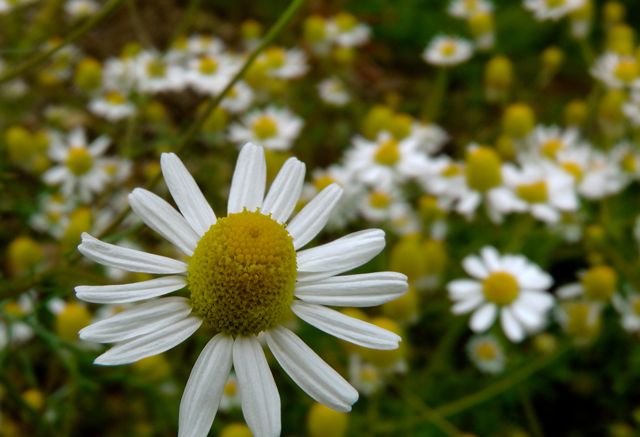
Chamomile
Catnip (Nepeta cataria) 
Another safe yet effective plant, catnip has a mild taste makes it a good choice for little ones.

Lemon Balm (Melissa officinalis) 
Another relaxing diaphoretic, lemon balm can also soothe the nerves to allay stress and reduce the duration and painfulness of fever blisters (herpes virus). More info here.


The Third Stage
During the third stage of fever the hypothalamus lowers the set point temperature to normal. The body’s cooling response is to sweat profusely. This “breaking of the fever” involves profuse sweating and is often accompanied by the throwing off of the covers.

It’s normal during this third stage for there to be a fluctuation of temperatures, so a person may feel chilled and then too hot, then chilled and then too hot and so on. In the end the temperature can often linger about a degree too high and will then, eventually, fall to normal.


Willow (Salix spp.)
Willow bark is specific for intermittent fevers or those fevers with fluctuating  temperatures. I generally use it as a tincture in lukewarm water but you could certainly use it as a decoction as well. More info here. 


Stay hydrated!
In this stage the highest risk from harm is due to dehydration. Throughout all the stages of a fever a person should be kept well-hydrated, but this becomes especially important during this stage due to the large loss of liquid through the sweating process.

Aviva Romm suggest the following blend to help balance the electrolytes and keep some dehydrated. 

Quart of water
1/2 teaspoon of salt
1/2 teaspoon of baking soda
2-3 tablespoons of honey or sugar
juice of half a lemon

Mix all the ingredients together (you may need to heat the mixture slightly to get everything to blend well). Then drink often as sips. 

Fourth Stage of the Fever
The fourth stage involves repairing and healing. Generally it is recommend that a person recovering from a feverish illness rest two days for every three days of fever. It’s also important to eat easily digestible protein (such as bone broth soups), to shower, to change sheets and generally making sure you are nourished, rested, clean, and comfortable. Returning to a regular regime too quickly can further compromise your immune system, leaving you more susceptible to sickness in the future.

Fever Considerations

When is a temperature too high? 
It’s important to not become too obsessed with the numbers on the thermometer. The best indication that a fever has become serious enough for more advanced care is the state of the person or child. Delirium, loss of consciousness or extreme fatigue are all serious signs. 

Anytime severe dehydration comes in to play also indicates time for medical treatment. 

In a normal person a fever has to get extremely high before it will cause injury. Human cells start dying at 1100.

Truly the highest risk from fevers is from dehydration and electrolyte imbalance.
However, there are special considerations when dealing with infants and the elderly or anyone who has a compromised immune system such as AIDS, cancer, or prolonged illness.

Bergner relates a review published in the conservative medical journal The New
English Journal of Medicine that looked at the treatment of fevers. It concluded
that there are three classes of people for whom lowering the fever is beneficial.
  • people with heart disease (because the heart has to work really hard during a fever)
  • very weak patients (increased metabolic demand may be too much)
  • some cases of pulmonary disease
Basically if you have special health circumstances or if you are caretaking someone with a fever who is displaying alarming signs (as stated above) then please seek medical help. 

To eat or not to eat?
Ever wonder why it’s commonly said to starve a fever and feed a cold? When a person’s temperature rises one degree past their normal set point their natural appetite disappears. This is due to amino acids in the body being used for the immune response rather than for digestion. Ingesting bone broth soups and nutritious teas and infusions will serve you much better than eating while you have a fever. Once a temperature returns to normal, regular foods can be introduced back into the diet. 

Most importantly do not force yourself to eat during illness. Stay hydrated and only eat when hungry. 

Febrile seizures
A febrile seizure is a convulsion triggered by a rise in body temperature. It is a myth that high fevers cause febrile seizures. If children are prone to febrile seizures then that seizure will happen as easily at 1010 as it will at a higher temperature.

Paul Bergner:
Febrile seizures in children are not correlated with the severity of the fever. The cause is generally unknown, and they affect 3-5% of children in the U.S. and about 15% in some countries. Giving antipyretic drugs does not reduce the incidence of future seizures in children. Most disappear by age five. Most do not indicate a serious cerebral disease.

If a baby is experiencing a febrile seizure it is recommended to place the baby on their side to allow for saliva to flow from the mouth to keep the baby from choking. If a seizure lasts longer than 5 minutes call 911.

Herbalist Kiva Rose told me about using elderflower for those children who are prone to febrile seizures. It’s believed to help reset the fever mechanism.

In treating fevers use your best judgment and remember our job is to support the body’s natural functions, not quell symptoms. Fevers can be serious – if in doubt seek more advanced care.

Further resources

Senin, 07 November 2011

24 Years Ago Today!


The Herbal Husband and I tied the knot.  Here is a surprise dessert I bought at the store this afternoon.  The Herbal Husband loves chocolate mousse so I found these small chocolate mousse tartlets.  The perfect size.  His words.  Mine is a small fruit tartlet.  Very good as well.  We also got another road trip to eastern Pennsylvania for the annual Allentown toy show and to visit our friends over last weekend.  I hope this is the last trip of the year.  We traveled a bit too much this year.  Now I have to fix my car.  I hate that part.  When a car becomes a senior, it usually starts to just come unglued!

This trip has been a standard in our lives over the years.  I went to Well Sweep Herb Farm in New Jersey that still was without power since last Saturday.  Hope power is back now.  Power crews and tree crews everywhere.  There were trees that had lost branches but not their leaves.  Very sad.  A lot of damage.  The herb farm had 18 inches of snow!
 Look at all of those herbs!  Too bad I couldn't take any with me!  It is going to be mild here for the next few days.  Always next year.

Also went to Sally Lunn Tearoom & Restaurant in Chester, NJ for afternoon tea in the morning!  Had cherry rose tea and a pumpkin scone.  Forgot that strawberry jam was served.  Not a good choice with the pumpkin scone.  Should have had my Spicy Basil Apple Jelly.  Now that would have been good.  I will leave you with that tease.  I'm promised way back in August that I would be doing some giveaways.  Probably not just one.  Have to discuss it with my packer extraordinaire, but it will be at least 2 and maybe 3 giveaways because I have been blogging for a long time.  So I hope you had a great day.  It was a beautiful day in the 'Burgh.  Just like the day we got married.  We were out shopping on our anniversary.  Had The Herbal Husband's favorite cornflake crumb chicken.  The recipe is on the cornflake crumb box.  Very easy and delicious.  Hope you had a great day.  Talk to you later.

Jumat, 04 November 2011

Photo Friday - Oregon Grape Root

Photo Friday is here. Every other Friday I choose a plant and post a plethora of photos amidst some herbal tidbits. 


A couple weeks ago a friend of mine called to ask for a favor. She had a fairly large oregon grape plant in the middle of her garden. She had let it grow there since it was part of the native landscape. However, after years of watering and compost it was stretching too big. Would I be interested in harvesting it? she asks. 


Hell yes! 


It took me three hours to completely uproot the plant and then another 7 hours to scrape off the root bark for tincture. Spending hours with this plant and crafting it into medicine was well worth it! 


So in homage to this beautiful plant, I chose Oregon Grape Root for this week's Photo Friday. 


There are several species of this plant that grow frequently in the Pacific Northwest. According to Tom Elpel there are 520 species worldwide.  Mahonia aquifolium is the one that grows most frequently around me. Mahonia nervosa is frequently found on the other side of the Mountains. You can tell the two species apart by how many leaflets they have. 


Sometimes referred to as Tall Oregon Grape, Mahonia aquifolium has 7-9 leaflets. 


photo from wiki commons
Sometimes referred to as Dull Oregon Grape, Mahonia nervosa has 9-19 leaflets. 


True to its name, Tall Oregon Grape grows quite tall and can form dense patches of shrubs. 


In the spring yellow flowers appear bloom from the holly-like leaves. These flowers are edible. They have a slightly sour taste that goes well mixed into wild salad greens. 


Photo from wiki commons
Oregon Grape flowers have parts in threes. The above photo shows the 6 stamens, six petals and six sepals really well. 


The very young tender leaves can also be eaten. We chop them up finely and sprinkle them over vegetables and meats.


Once the leaves have matured however, they are quite spiny. I've often been pricked so deeply I've bled from the spines of the leaflets.  


Photo from wiki commons
The yellow flowers emerge into purplish blue berries. These berries can be coaxed into edibility. Be warned, depending on climate these are disastrously sour. I've had pretty decent oregon grape wine. Most people add loads of sugar to them to make syrups and jams. 


If the berries can be described as disastrously sour, then the roots are are decidedly bitter. 


The yellow coloring is due in part to the constituent berberine. In the herbal world you'll often hear people refer to "berberine plants". Oregon grape root, goldenseal, coptis and others all contain this constituent and are somewhat interchangeable for its action on the liver and its anti-microbial properties. 


It's vibrant yellow coloring also lends itself well to being a dye plant. 


At Mountain Rose's first annual Rootstalk festival I took a class from the infamous Howie Brounstein solely on Oregon grape root. The class was filled with interesting and humorous insights from his lifetime of working closely with this plant. 


Besides learning how it had saved his life (when he had a nasty tooth abscess while he was stranded on an island), I also learned about recent research showing how is  contains a specific multidrug resistance pump inhibitor (MDR Inhibitor) named 5'-methoxyhydnocarpin (5'-MHC). 


At the time that was Greek to me too. 


Basically, what this means is that it works to decrease bacterial resistance to antibiotics and antibacterial agents. Since resistance to bacteria is becoming an increasingly alarming problem this is fantastic news. Howie says that pharmaceutical companies are rushing to patent this constituent. (insert snarky comment here)


Oregon grape root is being threatened with over-harvesting due, in part, to the florist business. Those green leaflets stay vibrant looking long after they are picked making them very desirable for arrangements. Keep an eye on your local plants and report any illegal harvesting that you see. 


When harvesting the root for your personal use, learn how to harvest it sustainably. Horizontal and somewhat superficial roots can be sparingly harvested from the plant, leaving the remaining plant to grow. 


This fall I tinctured five quarts of the root bark. They'll go to good use at the Methow Herbal Health Center


Resources
Very informative monograph by Kiva
King's American Dispensary on Henriette's site
Further information about 5'-MHC


Rabu, 02 November 2011

The Herbal Laundry is Back and Your Opinion!


Haven't done the laundry in a while.  We always find something else that needs to be done more.  Now the herbal trees are back in the basement and I need to make the best of the fragrance when I'm trying to get to the dryer!  Always something!  Hope you are having a great day.  BTW, what do you think of the new templates for Blogger?  They seem a little too messy.  Talk to you later.

Selasa, 01 November 2011

Getting a Second Bloom and Tidying Up!

I cut back the yarrow in August (It's in the center of the photo.), I think and it's going to bloom again.  I really try to tidy up the garden.  It doesn't always happen until late in the game, but for the most part it is necessary.  Diseased plants go to the trash and healthy plant material goes to the compost.  I like to keep some of the flower heads for the birds to nosh on.  They love the coneflowers and the black-eyed Susans.  I have even seem them on the mint seedheads even.

I love the calendulas in the fall season.  I am hoping to have a bouquet of herbs on the Thanksgiving table and that I will have calendulas in the mix.
I usually have a second bloom of chives about this time of year.  It is a really good bloom this time.  There are usually only one or two.  It was a beautiful day outside.  Got out for a walk and the sun is very bright.  Always good before winter really sets in.  Hope you had a great day.  Talk to you later.